Research & Grants › Design Grants › Charles River Floating Wetland
Charles River Floating Wetland
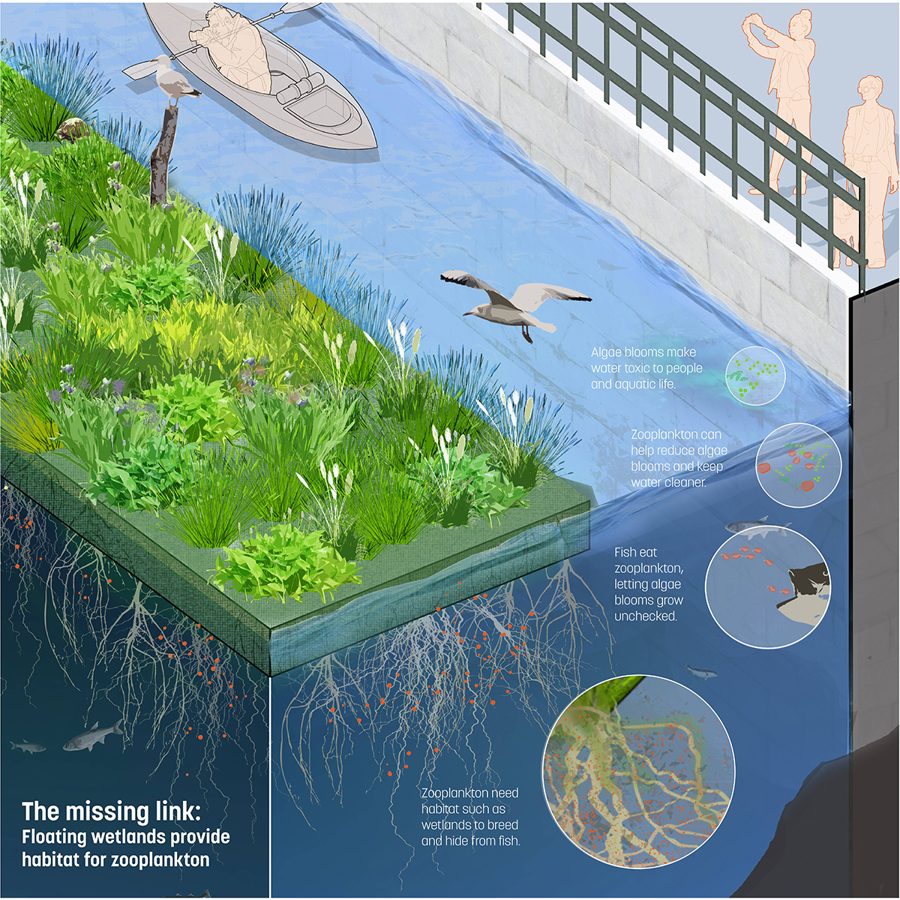
Floating wetland concept graphic | Charles River Floating Wetland in partnership with Sasaki
Climate
Laura Jasinski, Vanessa Nason, Max Rome, Pennie Taylor
2018 Design Grants
By installing a floating wetland on the Charles River, the team plans to create a visually impactful statement about missing habitat, to engage the public in an important conversation about the relationship between ecology, pollution, and water quality, and to conduct unique research that can be used to design and size future installations in order to curb harmful algal blooms through increased herbivorous control.
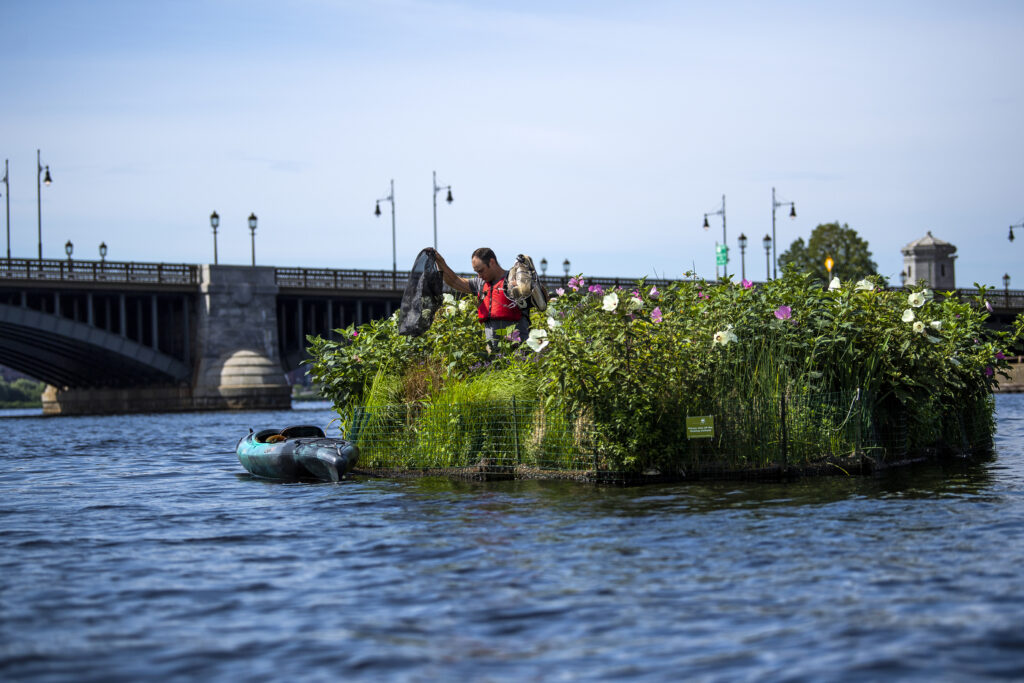
The Charles River Floating Wetland, an initiative of the Charles River Conservancy (CRC), will be the first project of its kind in Greater Boston. An important aspect of this project is the role that it will play in informing future work by serving as a case study for designers and river advocates and as a point of reference for regulators unfamiliar with a project that does not fit easily within the typical permit process.
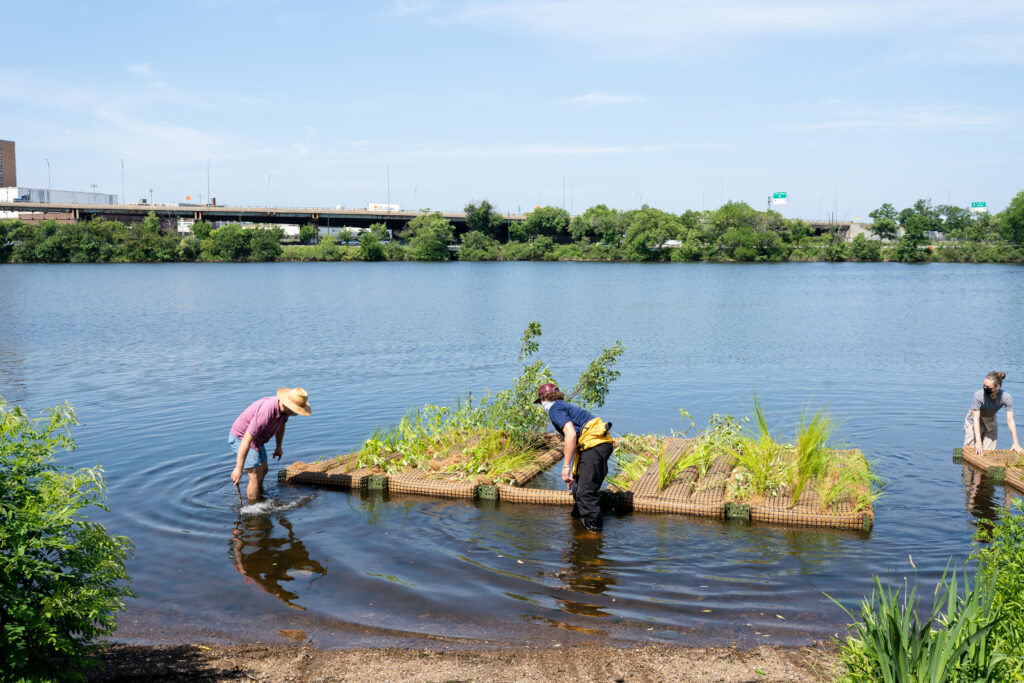
The floating wetland island will be assembled from self-buoyant modules, which will be roughly 57 feet by 19 feet when assembled and will be anchored to the bottom of the river. The island will be planted with a variety of native wetland plants. Those plants will grow through the matrix, their roots reaching into the water to serve as additional habitat for microscopic zooplankton. A research program will examine whether the additional habitat has a meaningful impact on zooplankton species distribution and size. Because zooplankton can be efficient grazers of cyanobacteria, supporting their population could provide another tool for controlling harmful algal blooms.
On a fundamental level, the health of the Charles River is an issue of equity. As recently as the 1950s, the banks of the Charles River were a public space where, during the hottest days of the summer, families of all incomes and backgrounds gathered to swim and cool down. The hope is that this project will contribute to the restoration of the Charles River and that this installation will help visitors to imagine a future in which plantings and restored ecology lead the way to a river that is healthy, safe, and swimmable.
Recognition
The project received both a 2025 Honor Award from the American Society of Landscape Architects (ASLA) and a 2025 Honor Award from the Boston Society of Landscape Architects (BSLA).
The multi-year monitoring results show that one acre of floating wetland can offset nutrient loading from 7 to 15 acres of dense urban development, comparable to infiltration-based green infrastructure and more effective than biofiltration methods and green roofs. Ecologically, they also enhanced aquatic habitat, attracting native fish, improving macroinvertebrate diversity, and supporting zooplankton dynamics that suppress algal blooms.
Community engagement was central: students built mini floating wetlands using STEAM kits, kayak tours introduced residents to the project, and a solar-powered underwater camera connected the public to river life. These efforts boosted environmental awareness and participation.
The award recognizes not just the project’s excellence in research and environmental impact, but its creative blend of science, design, engineering, and public engagement. Floating wetlands are now being celebrated as a powerful, scalable solution for making cities healthier, more beautiful, and more resilient.
The Charles River Conservancy works to amplify community voice and catalyze bold solutions, to make the Lower Charles River and its parks more vibrant, healthy, and welcoming now and in the future.
Related
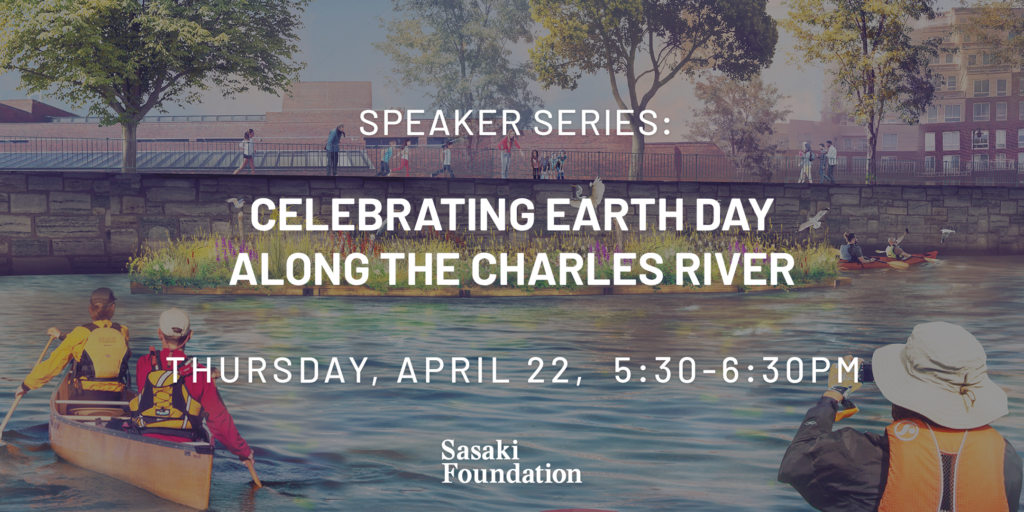 Celebrating Earth Day Along the Charles River
 2018 Design Grants Final Presentations
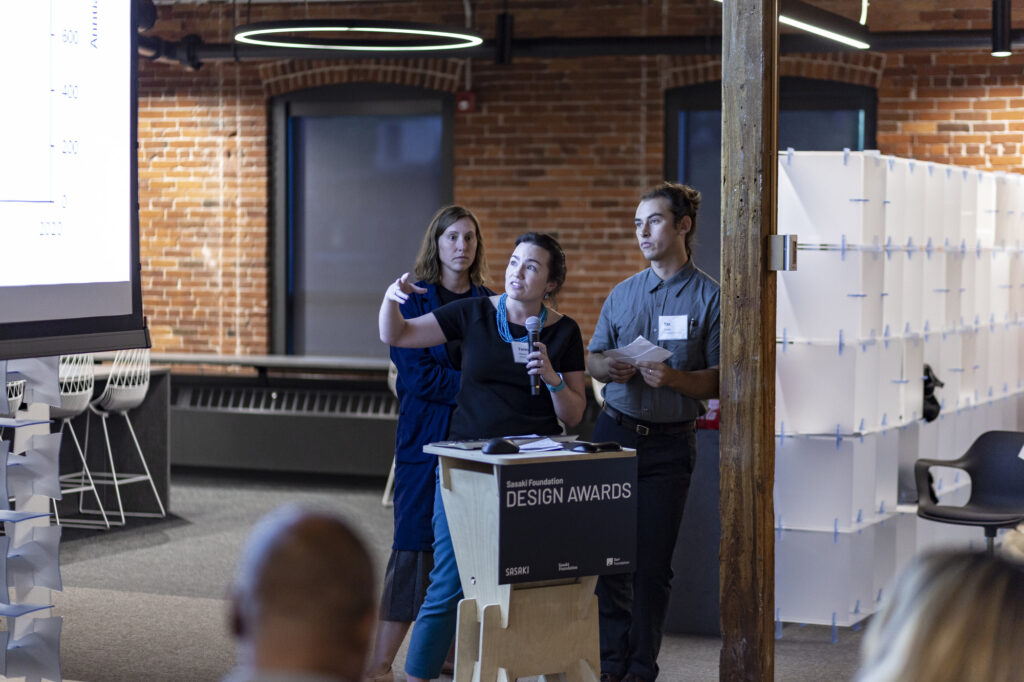 Meet Charles River Floating WetlandsAlicia Mosesso, the Foundation’s Program & Marketing Manager, sat down with two members of the Charles River Floating Wetlands project—Max Rome, PhD student in the Department of Civil and Environmental Engineering at Northeastern University, and Vanessa Nason, Project Manager for the Charles River Conservancy. This project explores an approach aiming to reduce harmful algal blooms […]