

About Hideo
Hideo left a legacy of collaborative design
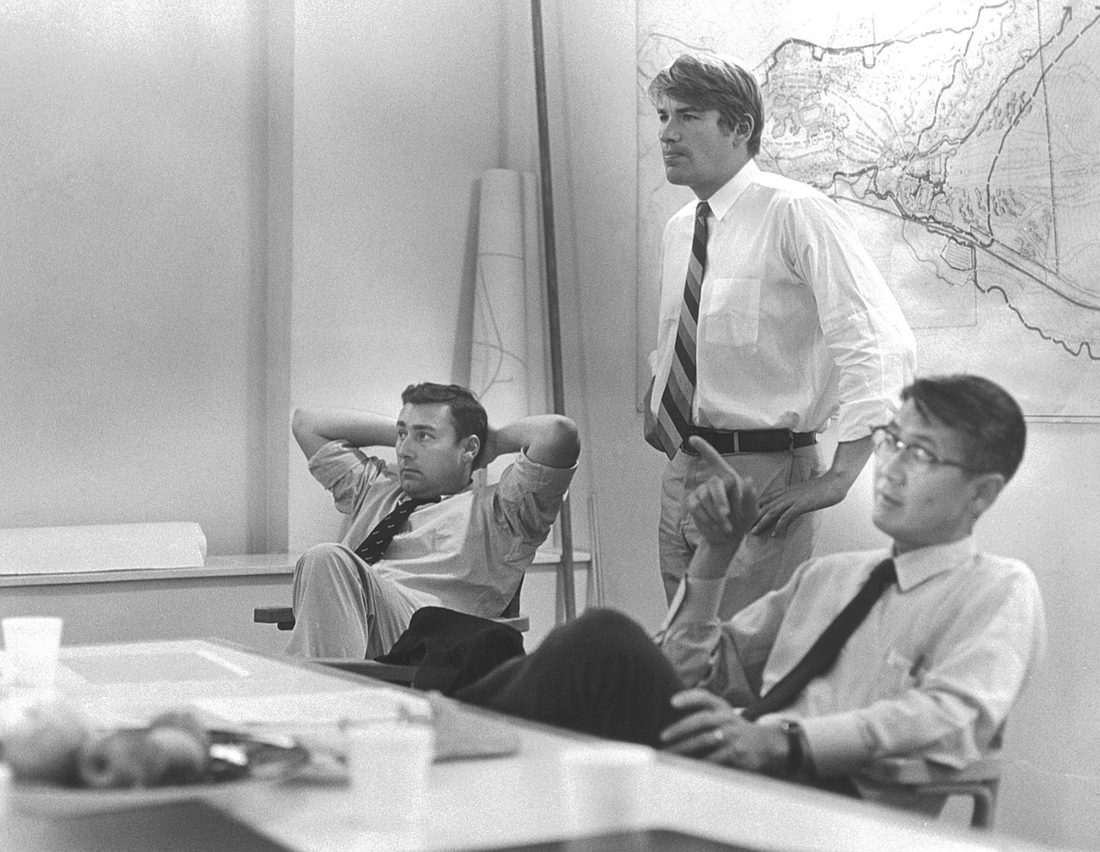
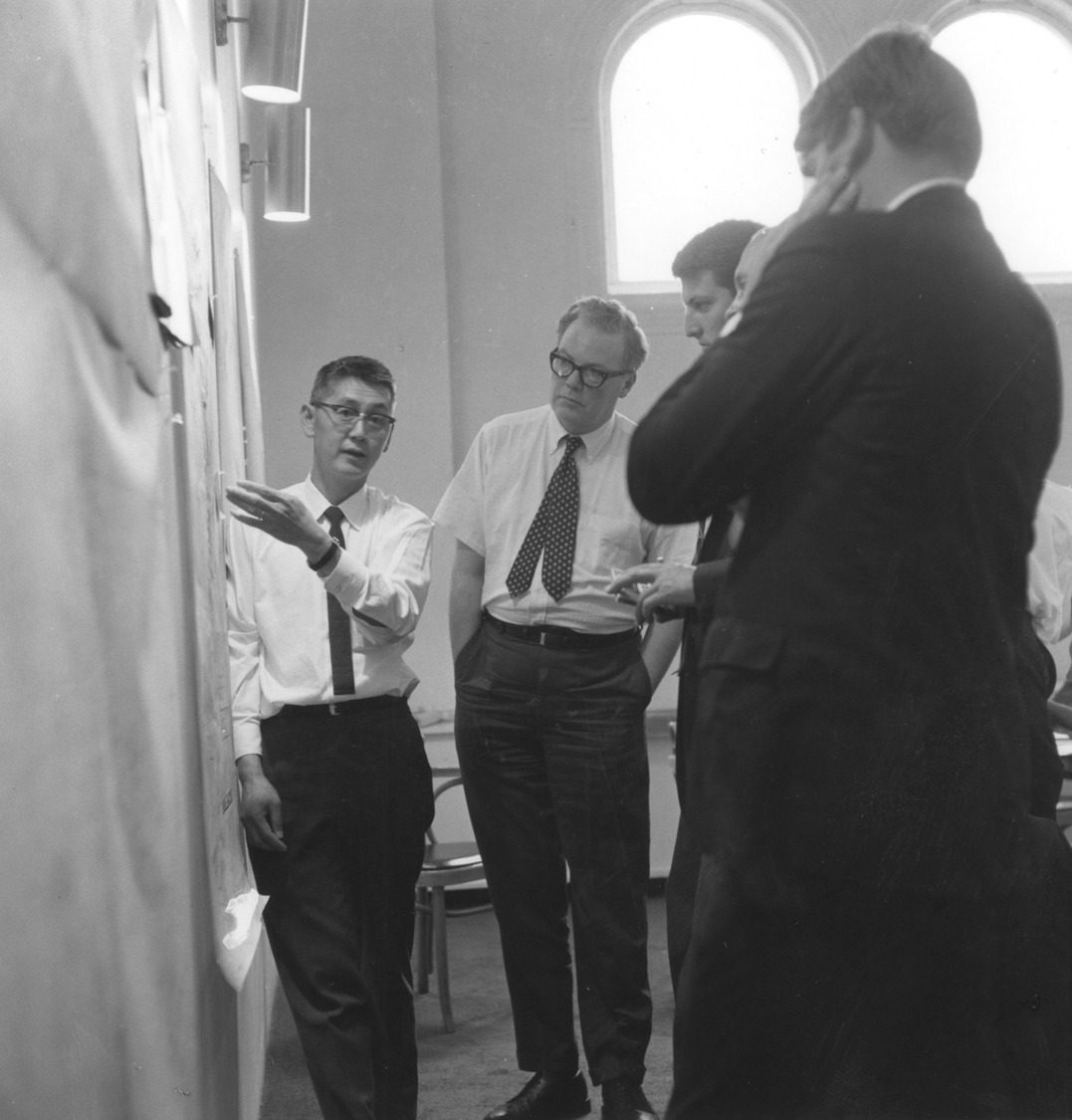
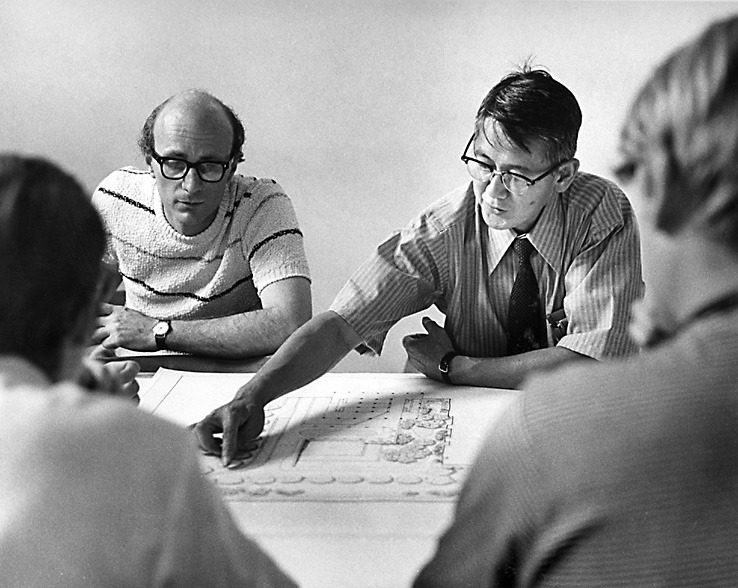
Hideo Sasaki was one of the most consequential designers and educators of the twentieth century. His legacy lies in bringing landscape architecture together with the other planning and design disciplines through his teaching at the Harvard Graduate School of Design and the professional practice that he founded, Sasaki.
Born in California to Japanese immigrants, Hideo grew up farming alongside his family. When Japan attacked Pearl Harbor in 1941, his family and community were forced into internment camps. Following WWII, Hideo faced serious racial discrimination in pursuit of his career. Despite enormous obstacles, he earned undergraduate and graduate degrees in landscape architecture. In 1953, he founded the firm that would evolve into Sasaki and joined the faculty at Harvard’s Graduate School of Design. By 1958, he was chair of Harvard’s Department of Landscape Architecture.
Through his teaching and practice, Hideo helped revolutionize the study of landscape architecture. He also was a pioneer in the concept of collaborative design, insisting we should use the whole depth of human knowledge to solve problems. He tied landscape architecture to the larger issues of planning. He blurred the lines between Harvard’s departments. And he broke down the traditional barriers between practice and teaching. As a teacher, he invited busy practitioners in a variety of disciplines to guest teach, enriching the curriculum and connecting it to the real world. As a practitioner, he brought promising students into his firm. They put his practical, interdisciplinary, and collaborative approach into action.
About the Book
Hideo Sasaki: A Legacy of Collaborative Design
by Richard F. Galehouse
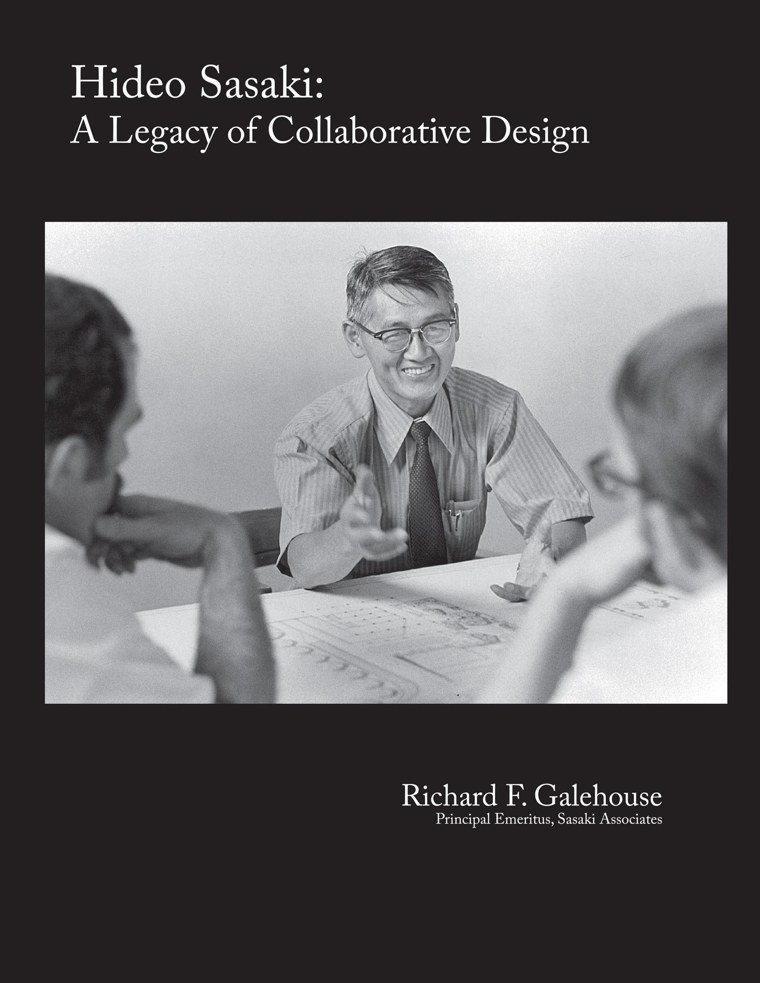
Author Richard Galehouse was first a graduate student and later a design partner of Hideo. His book traces the development of Sasaki’s practice in the early decades of the 1960s and 1970s. With selected case studies, Dick illustrates Hideo’s legacy of design collaboration.
Dick is donating all proceeds to support the Hideo Sasaki Foundation.
Purchasing directly through the link below maximizes your support of equity in design!
Buy the book direct
The book is also available at major retailers in print and ebook formats.
Timeline
Childhood
1936–1919
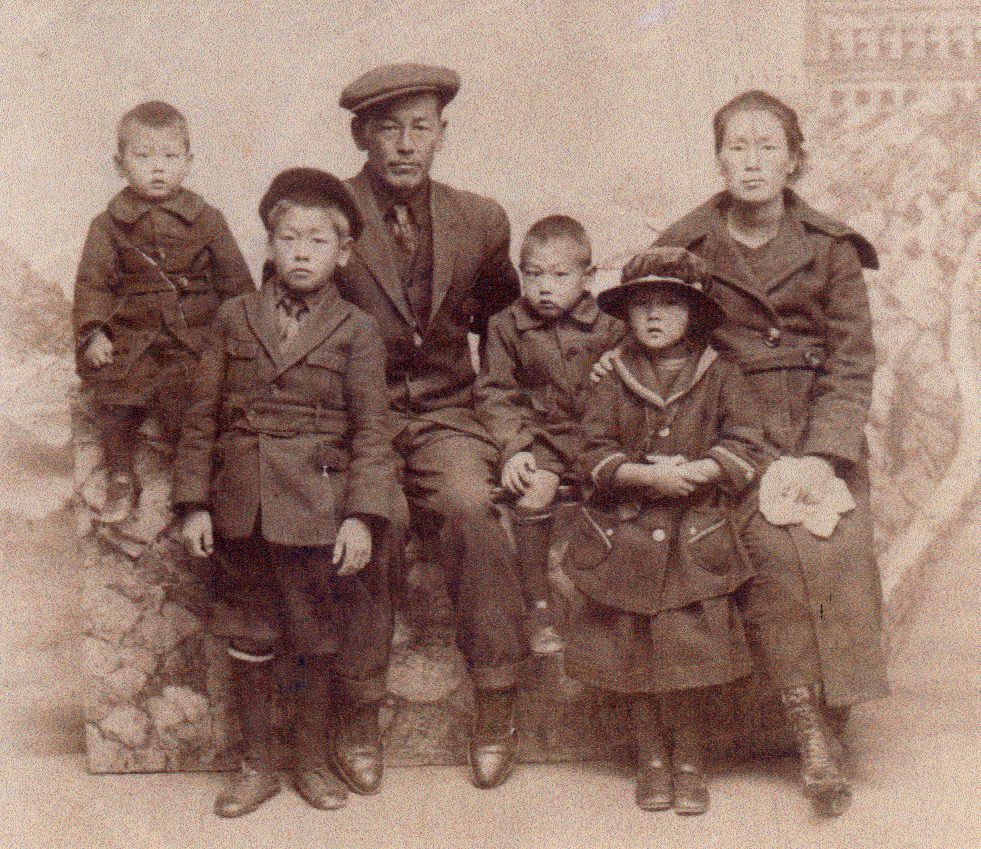
Young Hideo Sasaki with family, undated | courtesy Sasaki Library and Archives
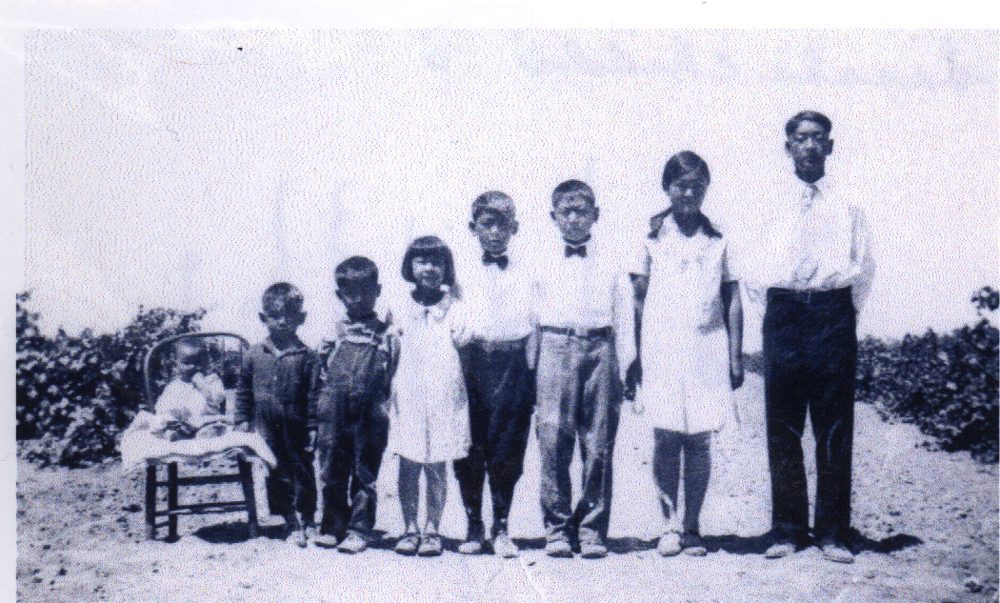
Young Hideo Sasaki (standing fourth from right) with siblings, undated | courtesy Sasaki Library and Archives
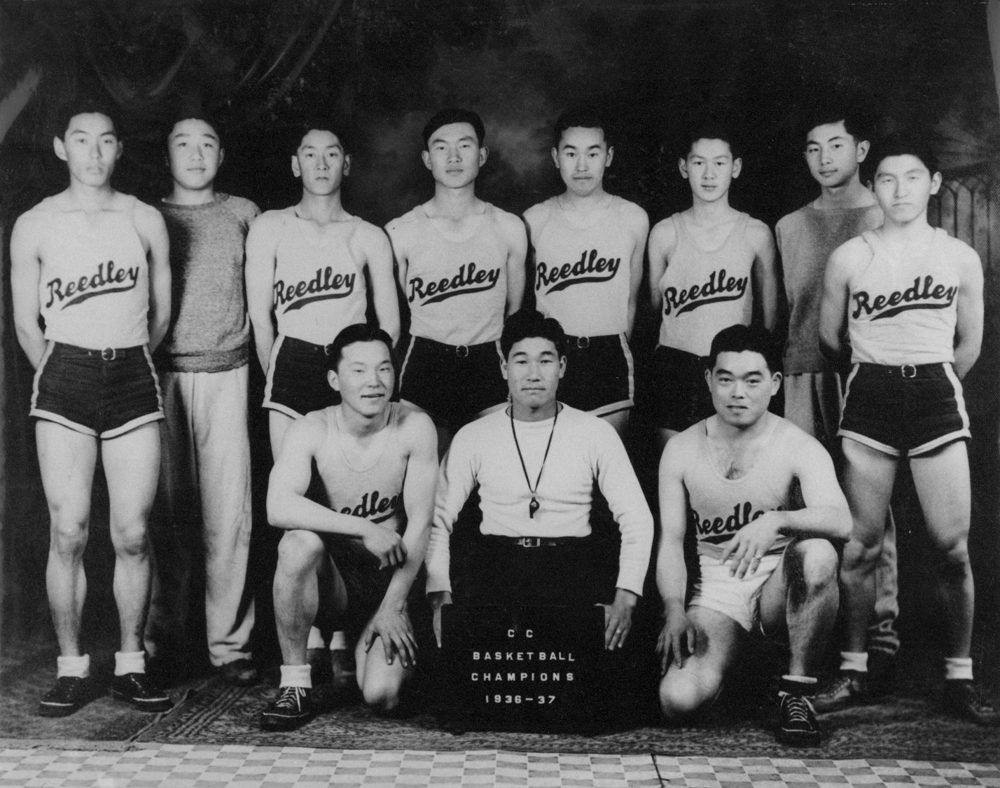
Hideo Sasaki (standing third from right) with his Reedley High School basketball team, 1937 | courtesy Sasaki Library and Archives
Born in California in 1919 to Japanese immigrants, Hideo was the fourth of eight children. He grew up farming alongside his family, enduring hard physical labor at a young age.
“My father came to the United States around 1895. He was quite young at that time and his aim was to find some work where he could make a fortune very quickly and then return to Japan. He came from a farm family in the Hiroshima province. My father was quite restless in Japan and he had an adventuresome spirit. He felt that Japan was stifling him and he had to expand and see a little more of the world.” -Hideo Sasaki, 1944 interviews
“We only had a 20-acre farm and it was pretty difficult for [my father] to feed the whole family. As the children got older we went out and did day work for other farmers in order to supplement the family income. We had to work in the California slave pattern which existed at that time. The hours of work were very long and the pay was very low.” -Hideo Sasaki, 1944 interviews
“My mother wouldn’t let us use the vegetables grown on the farm because we had to sell them to buy other things. Another frequent meal that we had was four eggs scrambled with milk and this would be cut into 10 pieces and we would eat it with rice.” -Hideo Sasaki, 1944 interviews
“The only recreational outlet for the nisei (second generation immigrant) kids was basketball. I started to play this game from an early age.” -Hideo Sasaki, 1944 interviews
Education Pt. 1
1940–1937
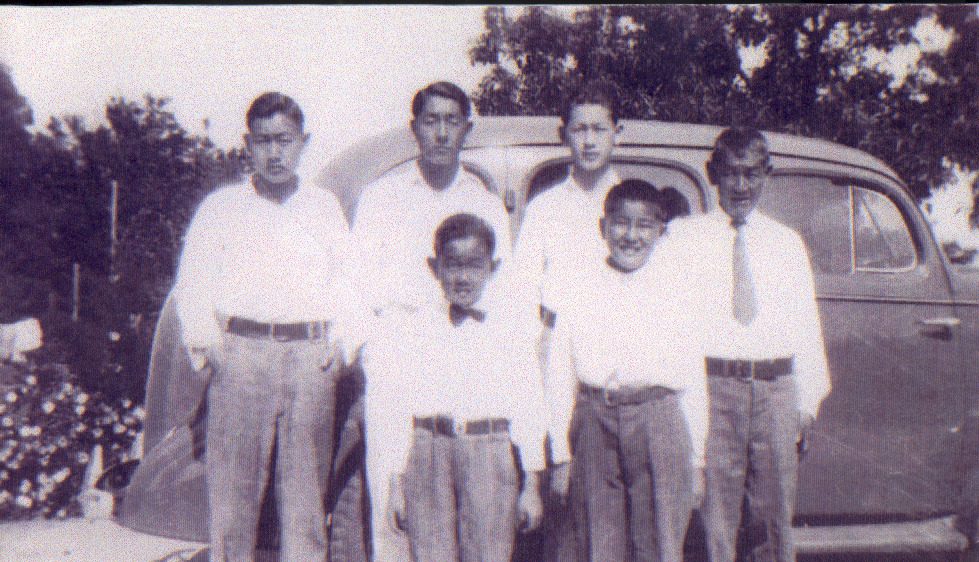
Hideo with his father and brothers, undated | courtesy Sasaki Library and Archives
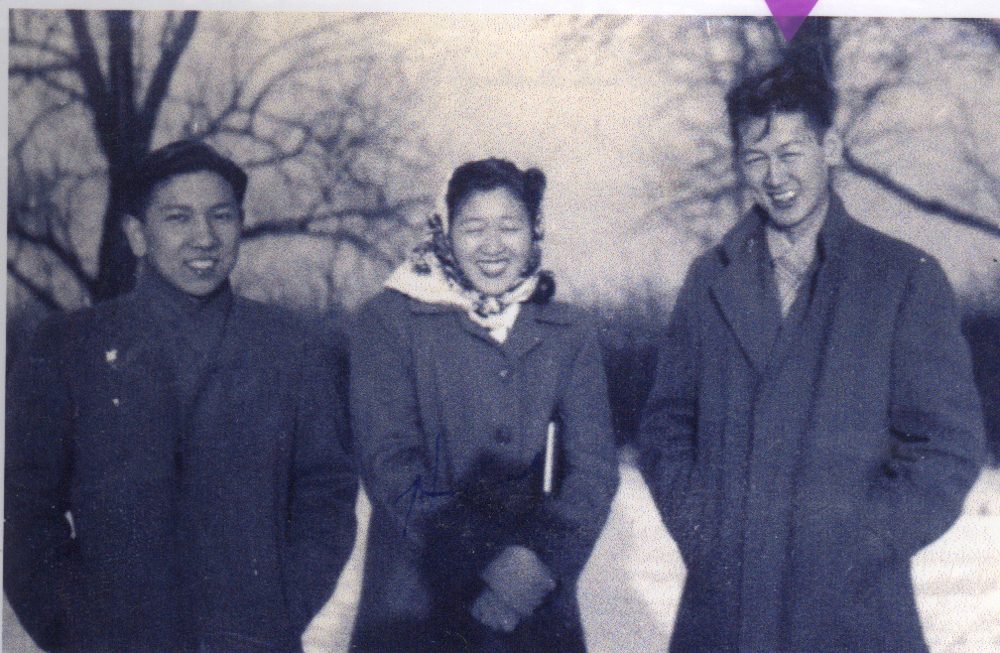
Hideo Sasaki (right) with family, undated | courtesy Sasaki Library and Archives
In 1937, Hideo attended Reedley Junior College, where he earned his Associate of Arts.
“I never dared to even dream that I could go [to college] because none of the others before me went. It was the accepted way of life to work on the farm after high school graduation. I was the first nisei to go on to junior college after graduation.” -Hideo Sasaki, 1944 interviews
In 1939, Hideo began attending UCLA, studying business administration with a minor in art.
”I enrolled at UCLA and my parents did not know that I had left the family until my other brother went back and told them. I was just a scared kid and I didn’t know how I would make out.” -Hideo Sasaki, 1944 interviews
In 1940, after learning about the field of city planning, he transferred to UC Berkeley and soon shifted to study landscape architecture.
“I liked art and I had come from an agricultural background so that it was natural for me to combine the two things. I knew that I was not good enough to be a straight artist and all of the farmer boys wanted to get away from the farm. I thought that if I took landscape architecture there would be a combination of the two things in which I had experience and interest in. My brother was a gardener and he interested me in plants and I realized that all farming was not deadening to the mind.” -Hideo Sasaki, 1944 interviews
“I felt that I would like to become a landscape architect and get a good job in a federal agency. I felt that there would be less racial discrimination if I got in through civil service. I thought that I would have to go on to graduate school and know the field twice as well as the caucasian fellows in order to compete with them for a job. … I never actually desired that I were a white person, but I often felt that it was so unfair to be treated and looked upon as a stereotype. I wanted to be recognized as an individual and not a nisei. I thought that I was equal to a white person and I hoped that I could be eventually accepted on my individual merits.” -Hideo Sasaki, 1944 interviews
World War II
1942–1941
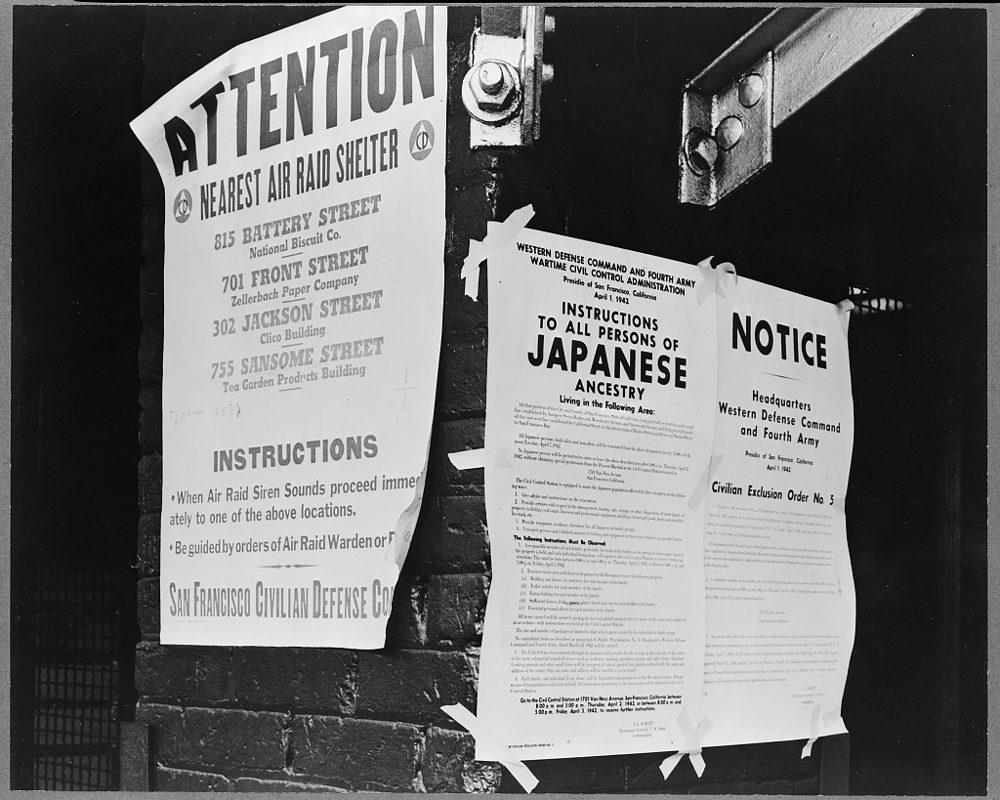
Civilian exclusion order #5, posted at First and Front streets, directed the removal of persons of Japanese ancestry by April 7, from the first San Francisco section to be affected by evacuation. Photo attributed to Dorothea Lange, 1942 April.
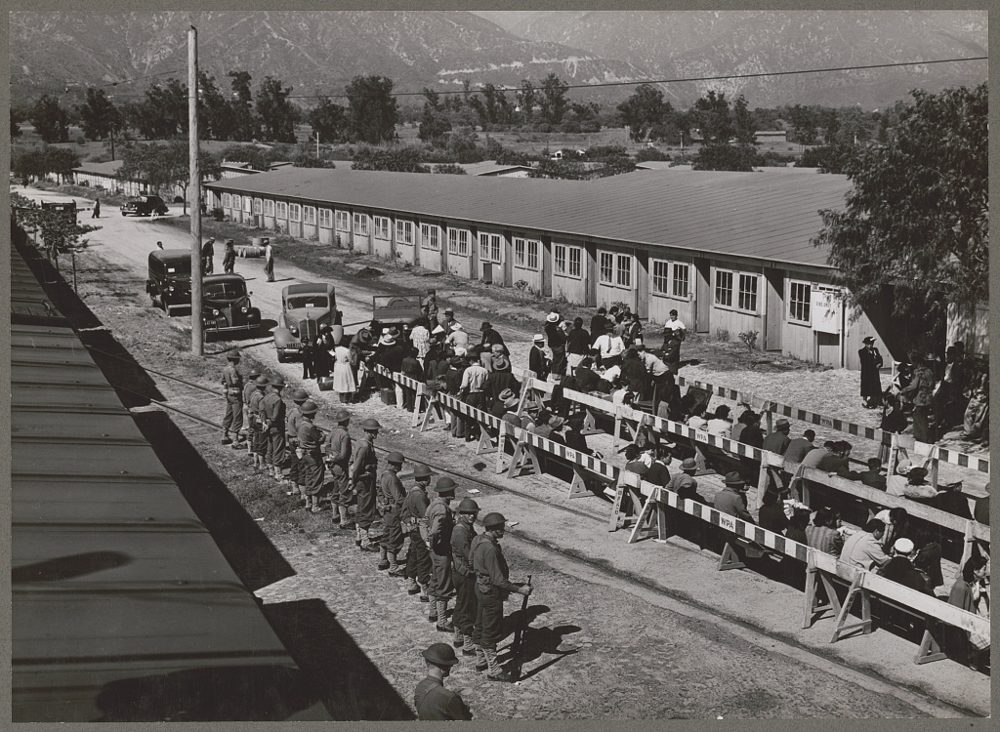
The evacuation of Japanese-Americans from West Coast areas under U.S. Army war emergency order. Japanese waiting for registration at the Santa Anita reception center. Photo by Russell Lee, 1942 April.
On December 7, 1941, Japan launched a surprise attack on the U.S. naval base at Pearl Harbor in Hawaii. The next day, the United States formally entered WWII.
“I was studying for the finals that Sunday of December 7, 1941. I happened to be reading a book that morning and I idly turned on the radio to relax for a few minutes. When I first heard the news of the Pearl Harbor bombings, it didn’t sink home at all.” -Hideo Sasaki, 1944 interviews
“My whole reaction then [to the Pearl Harbor bombings] was to withdraw into myself as I usually do when confronted with a crisis. I didn’t want to talk to the other nisei fellows any longer as I was numb. I went out and I became greatly upset. I had immediate fears that I would attract attention as a treacherous Jap.” -Hideo Sasaki, 1944 interviews
“Towards evening I thought I would go out for a moment but I felt all eyes were staring at me so I didn’t go very far. I expected somebody to jump on me and attempt to beat me up at any moment. I was very nervous and tense. That evening I was worried sick and didn’t sleep very well.” -Hideo Sasaki, 1944 interviews
In February 1942, President Roosevelt issued Executive Order 9066, authorizing the military to evacuate all persons deemed a threat from the West Coast. The next month, the U.S. government began to forcibly remove West Coast Japanese Americans from their homes, incarcerating them in internment camps.
“As the evacuation actually began to get underway, my attitude toward my college classes took on a more or less ‘I don’t give a damn’ frame of mind. The evacuation took away what little feeling of security that I did have. The semester ended for me on April 25 and that was the last day that I could stay in Berkeley without being evacuated with the Berkeley group to Tanforan.” -Hideo Sasaki, 1944 interviews
In August 1942, Hideo and his family arrived at the Poston War Relocation Center in Arizona. The following month, he volunteered to work at a sugar beet farm in Colorado and was permitted to leave the camp.
“When I saw the camp for the first time, it was worse than what I had even dreamed of. All I saw was row upon row of drab, black barracks. It looked like a dismal cemetery to me. At that moment I saw no chance of ever escaping from camp and I really felt trapped like a rat in a cage. We arrived in Poston around August 8, 1942. The first day there was the hottest that they had had that year. The nights were just as hot. I really hit rock bottom then and I felt like giving up everything and crawling into a hole to die.” -Hideo Sasaki, 1944 interviews
Education Pt. 2
1948–1943
#27. Sasaki, Hideo [part 2], Japanese American Evacuation and Resettlement Records, BANC MSS 67/14 c, folder T1.956 (2/2), The Bancroft Library, University of California, Berkeley.
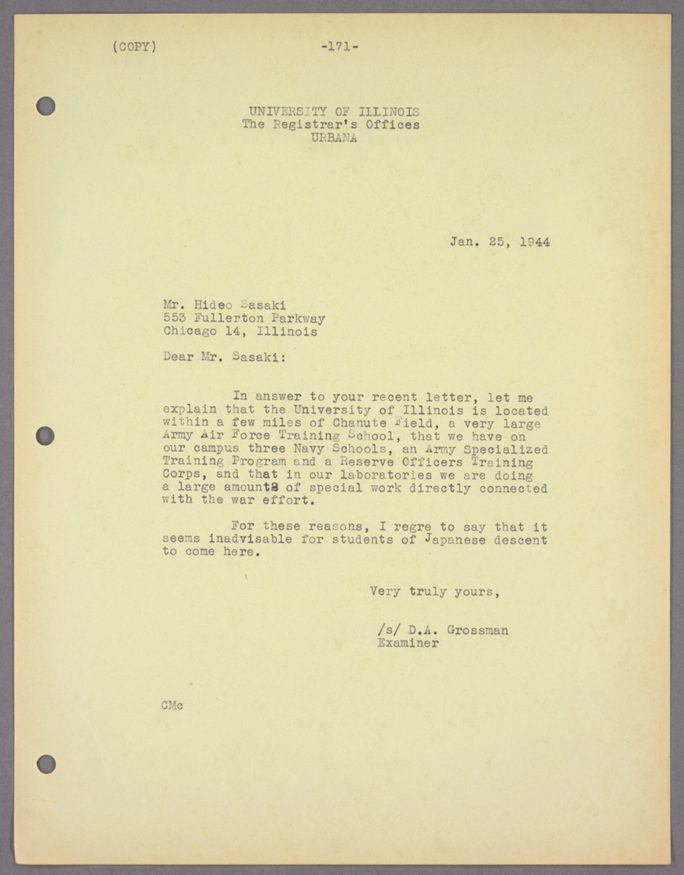
In 1943, Hideo resettled in Chicago, but was rejected by the University of Illinois because of his Japanese heritage.
“The letter from the University of Illinois (which you have read) just about killed the last bit of hope to which I had been clinging. The SRC also wrote a rather discouraging letter together with a new set of the Form 58. I could not help but think that Form 58 and other red-tape were but a farce.” -Hideo Sasaki, February 19, 1944, letter to Charles Kikuchi
“I am finding it harder and harder to appease the feeling of cynicism (perhaps bitterness to some extent) which is beginning to develop. U of Illinois was acclaimed ‘open’ to students of Jap-ancestry, and I think that I had my hopes higher than was justified. As I told you before, I had my plans as enrolling this coming summer because by that time I shall have enough money, I shall have established residency in this state, and I shall have made the necessary arrangements for quitting my present job.” -Hideo Sasaki, February 3, 1944, letter to a friend
In 1944, Hideo was finally allowed to study at the University of Illinois, and two years later he received his Bachelor of Fine Arts in landscape architecture.
“Coming from relatively poor circumstances you do not dream of ever doing something of this type.” -Hideo Sasaki, 1988 interview (Hideo Sasaki: A Legacy of Collaborative Design)
In 1948, Hideo completed his Master of Landscape Architecture at the Harvard Graduate School of Design.
Teaching & Professional Practice
1980–1949
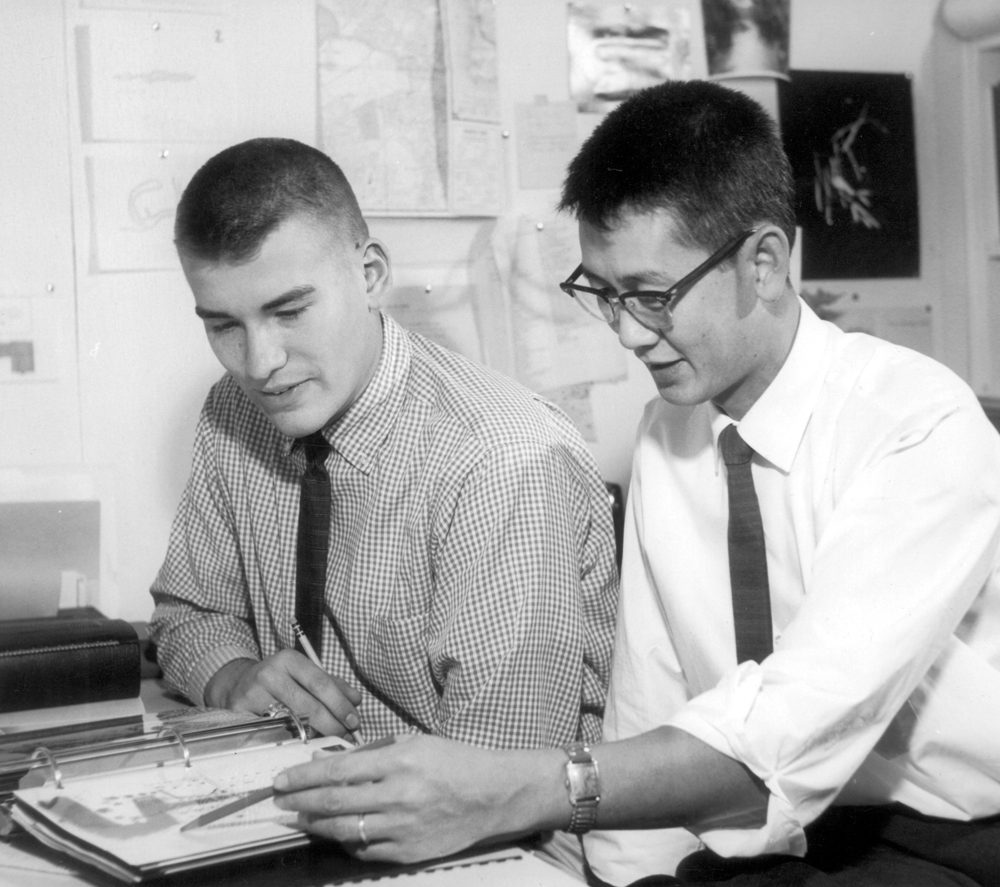
Hideo Sasaki with Stu Dawson, a student and eventual partner in the firm, October 14, 1959 | courtesy Sasaki Library and Archives
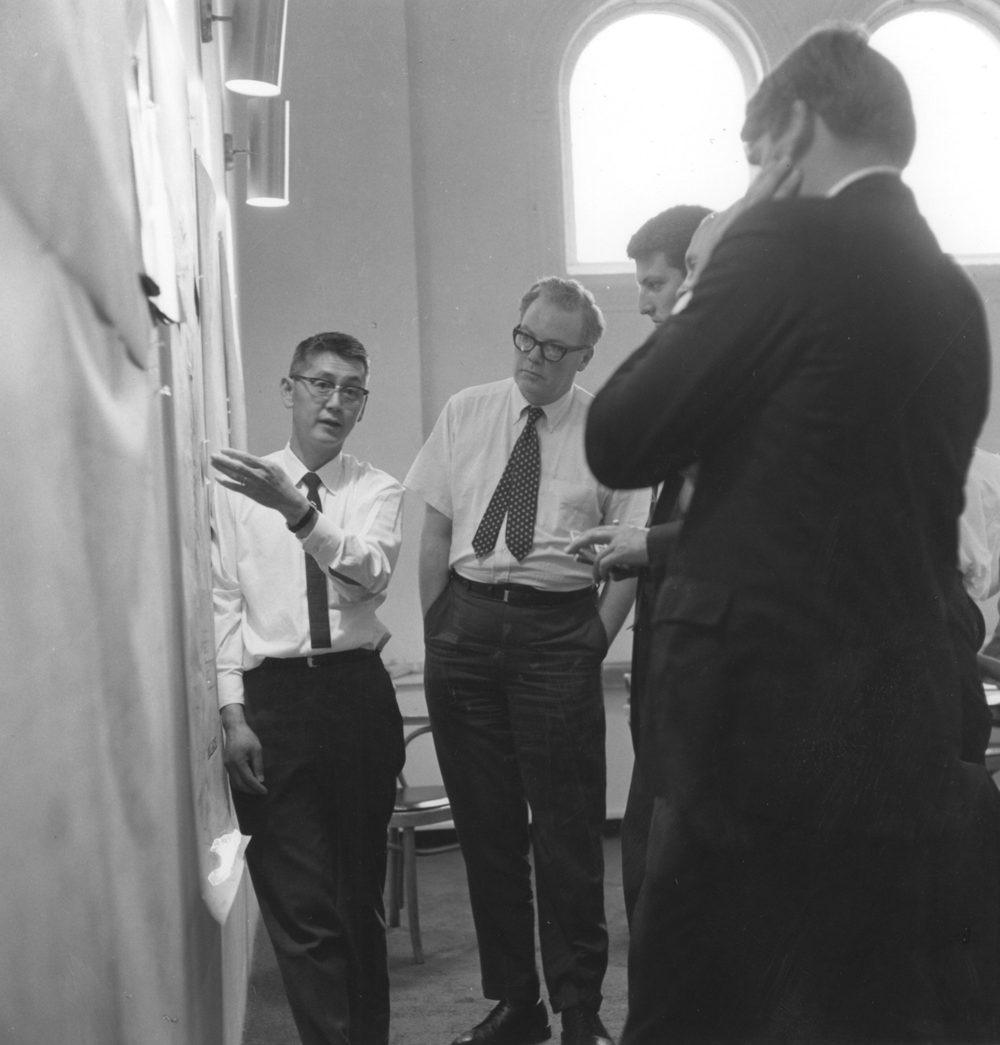
Hideo Sasaki and team working at the Sasaki office on 23 Main in Watertown, MA, 1960s | courtesy Sasaki Library and Archives
After completing his Master of Landscape Architecture at the Harvard Graduate School of Design, he then returned to the University of Illinois as an instructor, and worked at SOM in Chicago.
“A designer has to have this so-called analytic ability to be able to analyze a problem. And then he has to have a keen sense of judgement of what, you know, what the values are. Or what the purposes are. And then he has to have this ability to synthesize the whole thing.” -Hideo Sasaki, 1988 interview, courtesy Sasaki Library and Archives (recording)
In 1953, Hideo returned to Harvard as an instructor and founded Hideo Sasaki and Associates. In 1958, he became Department Chair of Landscape Architecture at Harvard.
“When the office started it was in combination with teaching. … The whole atmosphere, the interrelationship of teaching at the school, and seeing these kids grow up, and then in turn going back to teach, it was a great great period. I would never trade that for anything.” -Hideo Sasaki, 1988 interview (Hideo Sasaki: A Legacy of Collaborative Design)
Across his career, Hideo collaborated with the leading figures of the Modernist movement.
“I always felt that the social, environmental, and physical problems were so complex that it involved more than one discipline. I was not at any time or in any way jealous in the sense that I was personally possessive. I wanted to bring the best and it did not matter where the best came from or what profession. I think that spirit has prevailed. We do not say, ‘well you are an architect, or you are an engineer.’ That is the philosophical basis of my practice.” -Hideo Sasaki, 1988 interview (Hideo Sasaki: A Legacy of Collaborative Design)
with SOM
courtesy Sasaki Library and Archives
courtesy Sasaki Library and Archives
courtesy Sasaki Library and Archives
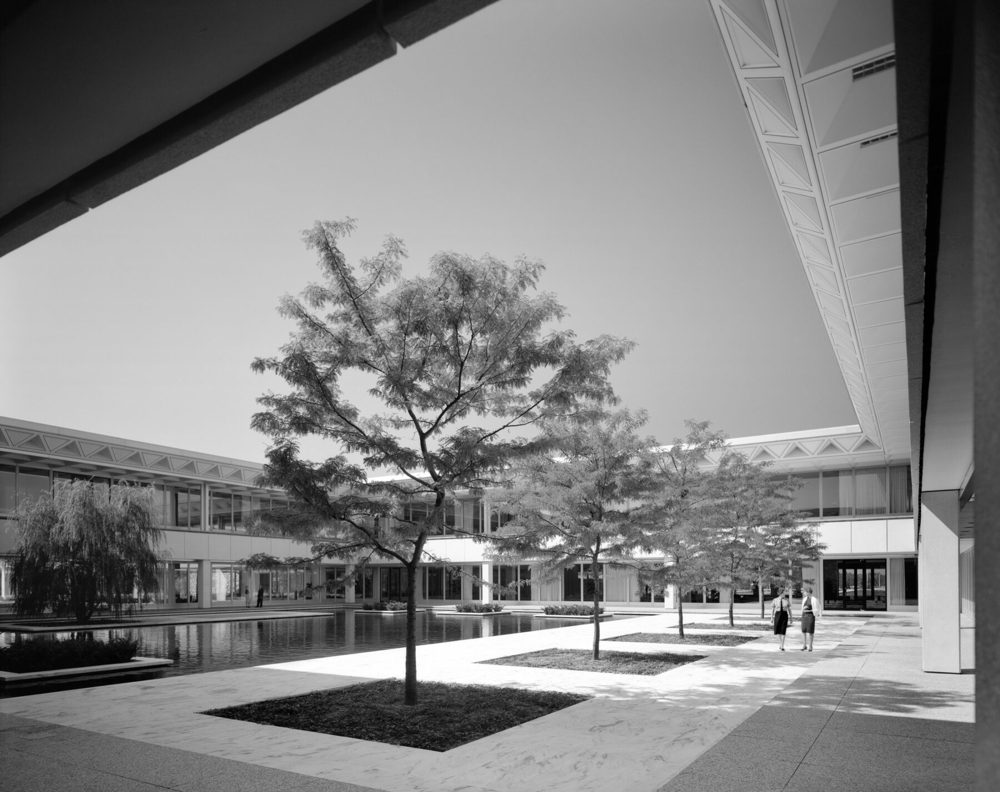
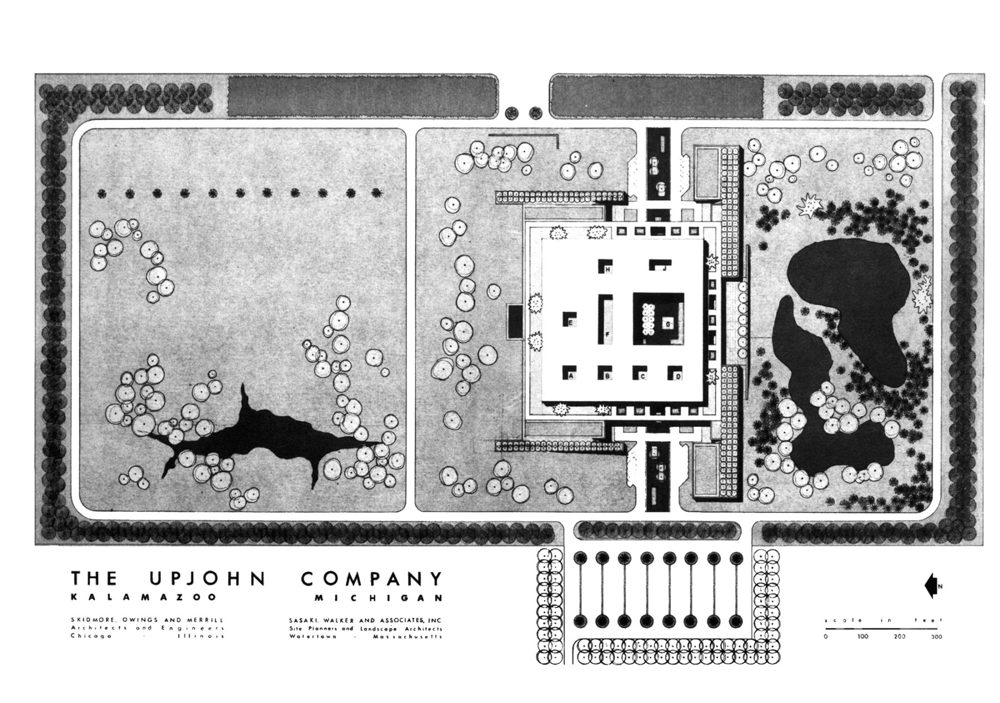
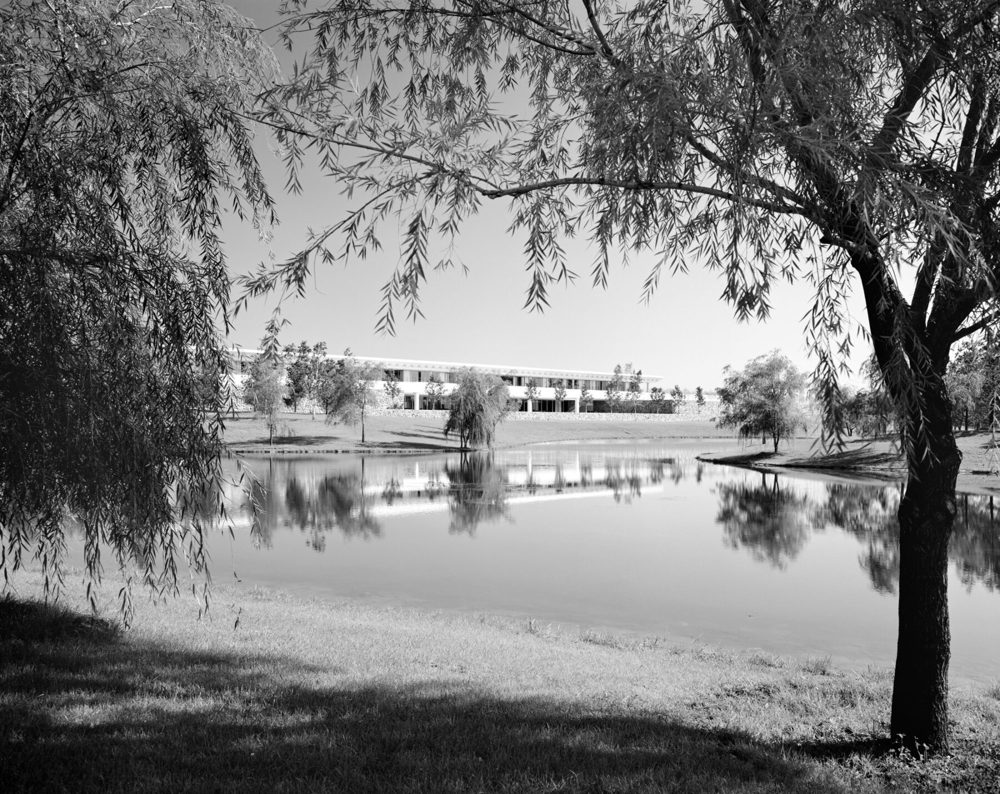
Beginning in the late 1950s in collaboration with Skidmore, Owings and Merrill, Sasaki developed a master plan and provided landscape architectural services for the site and courtyards of the Upjohn Corporation’s Executive Office in Kalamazoo, Michigan.
The office building is sited on a broad knoll overlooking the countryside with groves of pine trees defining the limits of the site and panoramic views of adjacent suburban residences. A reflecting pool defines the main entrance, while a man-made pond—visible from the cafeteria and dining room—provides a drainage basin for the site. Informal groups of willows line the edge of the pond and pine and maple constitute the planting of the uplands.
courtesy Sasaki Library and Archives
courtesy Sasaki Library and Archives
courtesy Sasaki Library and Archives
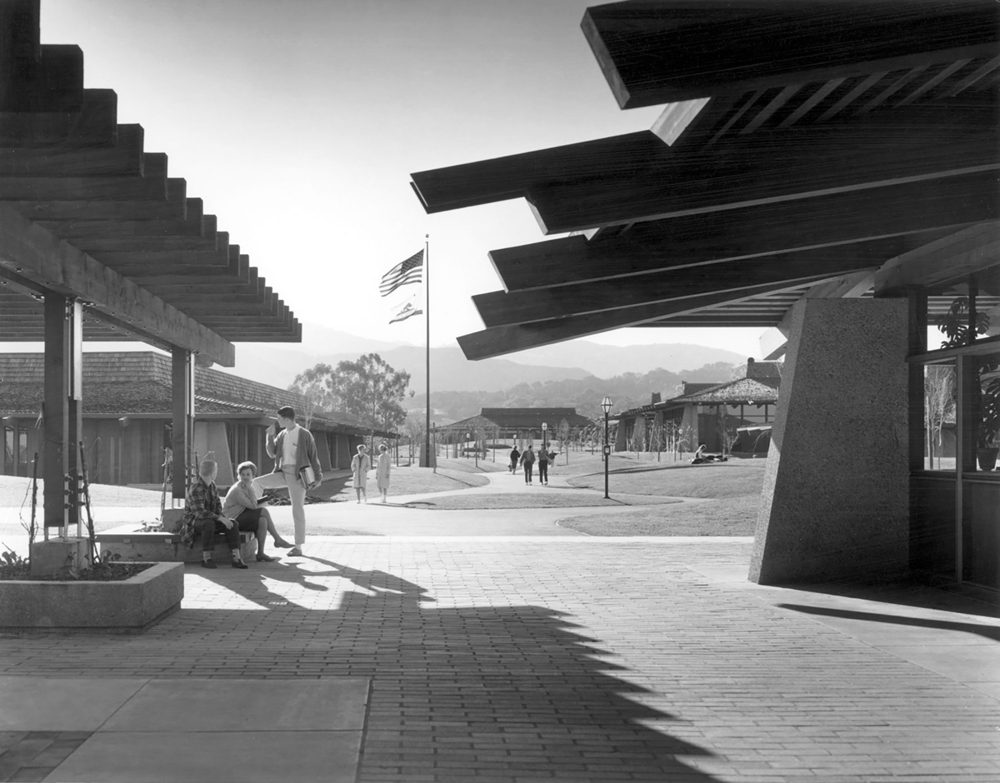
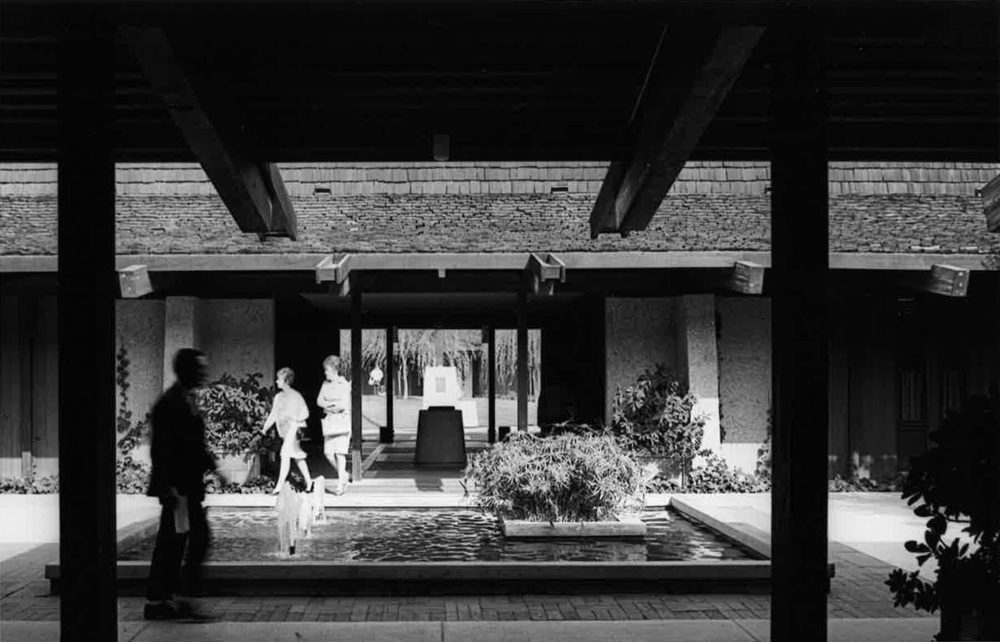
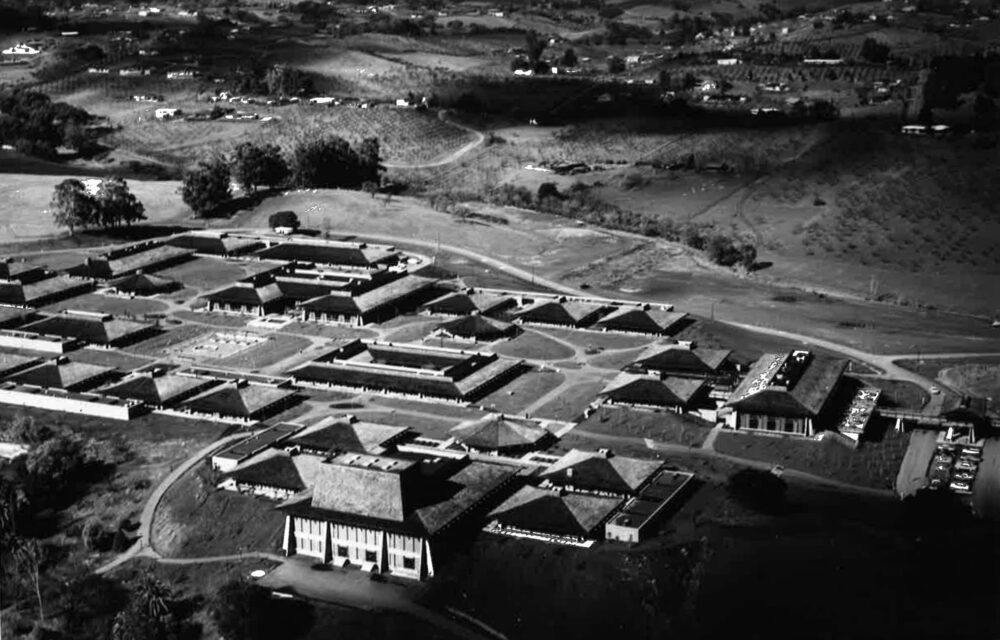
As enrollment into higher education soared following WWII, Sasaki was pioneering a new generation of campus master plans. In collaboration with architects Ernest J. Kump and Masten and Hurd, Sasaki led the 1960 Master Plan for Foothill College, a community college in Los Altos, California. The design is widely recognized for its groundbreaking relationship between building and landscape. The design introduced the concept of gently contoured mounds to recall the surrounding foothills and to contrast with the rectilinear layout of academic buildings. The two work together to lead students through campus and create moments to chat, study, or find a quiet moment of repose.
Read More:
“Foothill College Master Plan”
with buildings designed by Eero Saarinen
courtesy Sasaki Library and Archives
courtesy Sasaki Library and Archives
courtesy Sasaki Library and Archives
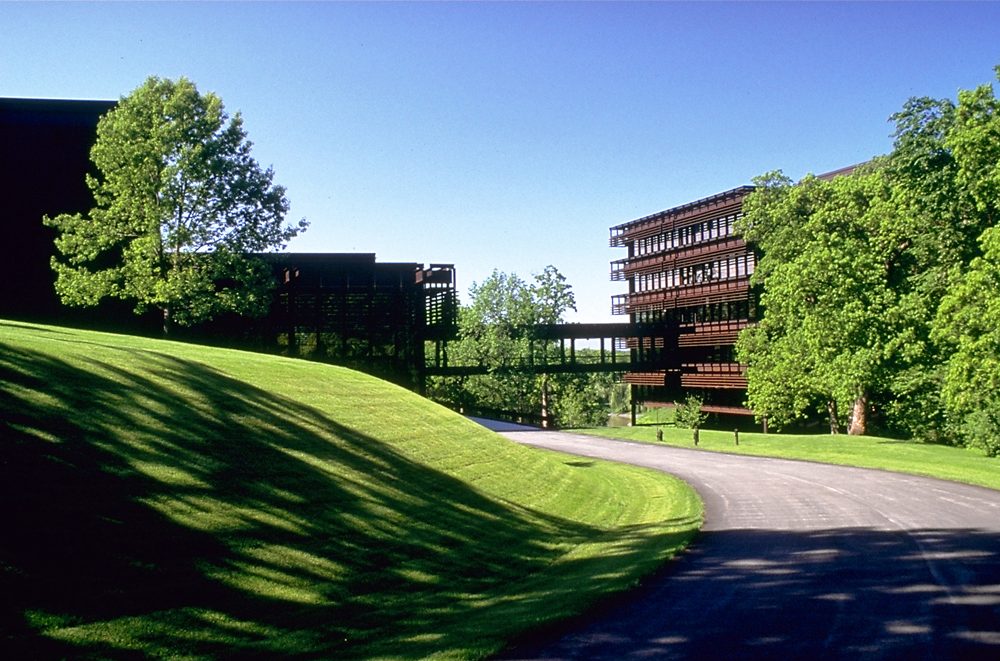
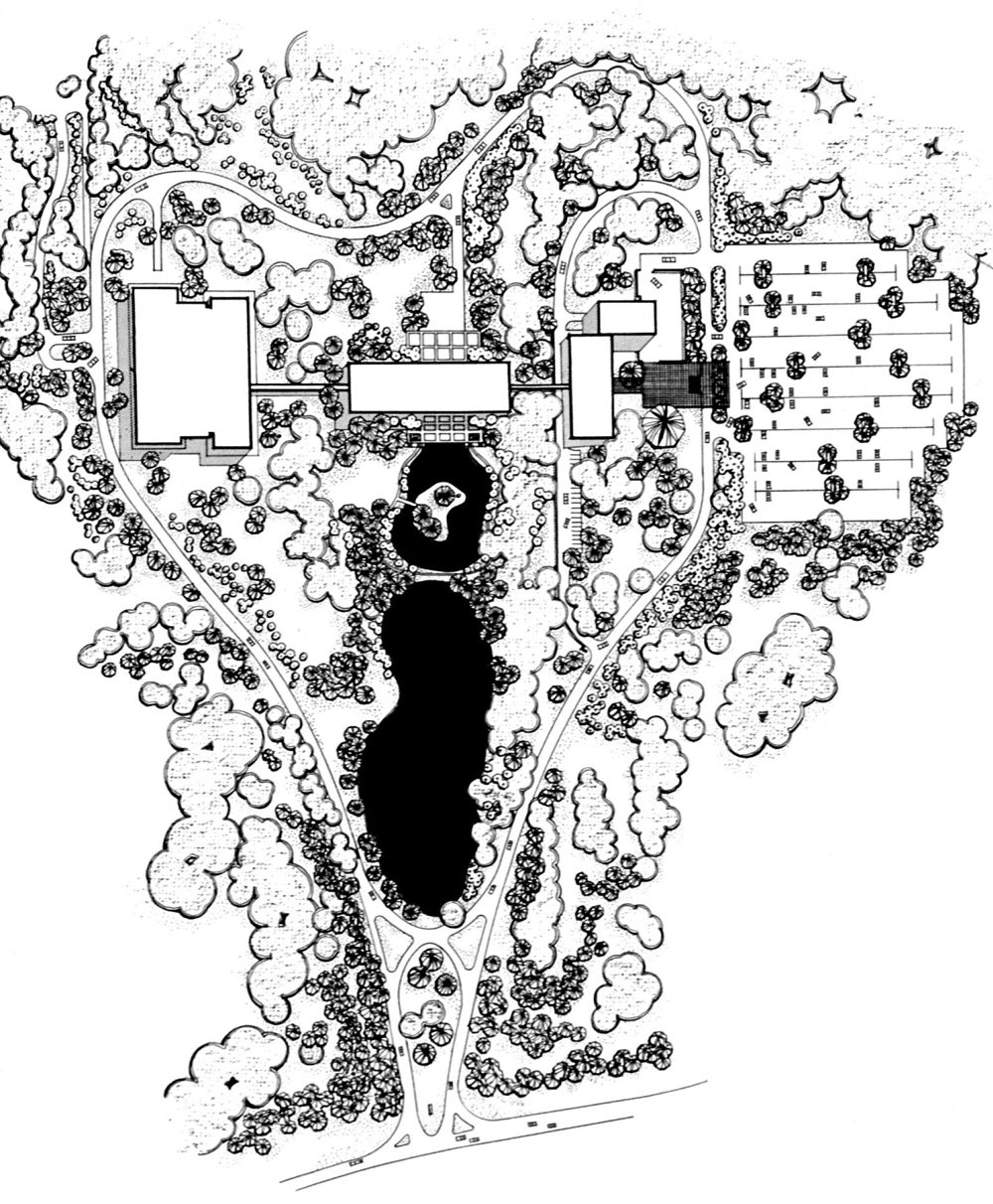
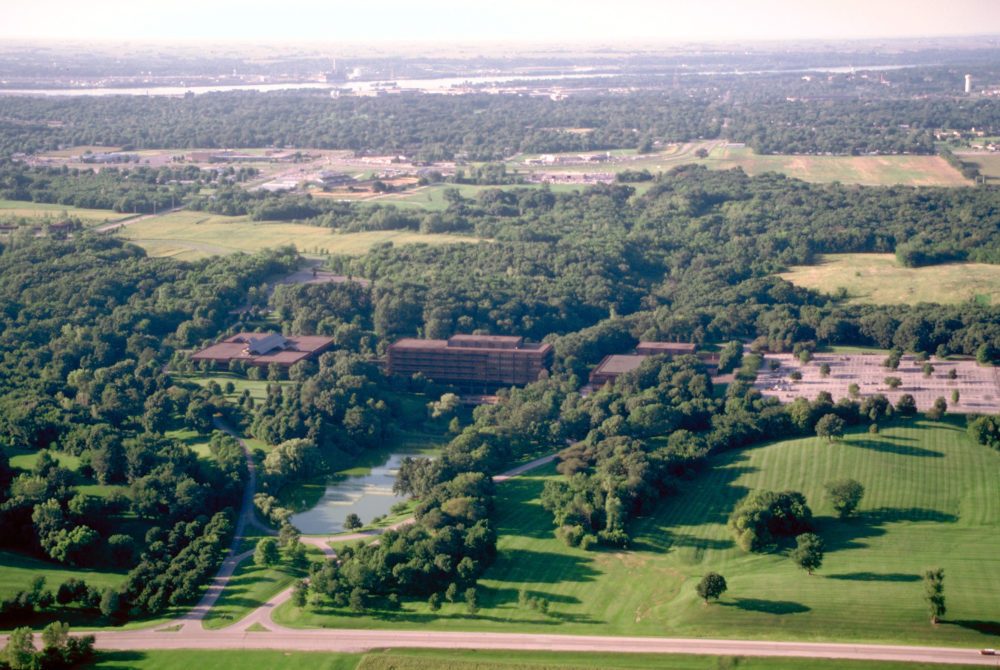
Sasaki’s landscape design for the 1,600-acre Deere and Company Corporate Headquarters is considered by many to be the archetypal corporate setting and was honored with the prestigious ASLA Classic Award in 1991. The buildings—which seem to emerge from the rolling topography and rich variety of deciduous vegetation—were designed by famed architect Eero Saarinen and received the AIA’s 25 Year Award in 1993. From its inception in the late 1950s, the Deere project has served as testament to Sasaki’s philosophy of marrying land and building, and the firm’s relationship with Deere continues to this day.
courtesy Sasaki Library and Archives
courtesy Sasaki Library and Archives
courtesy Sasaki Library and Archives
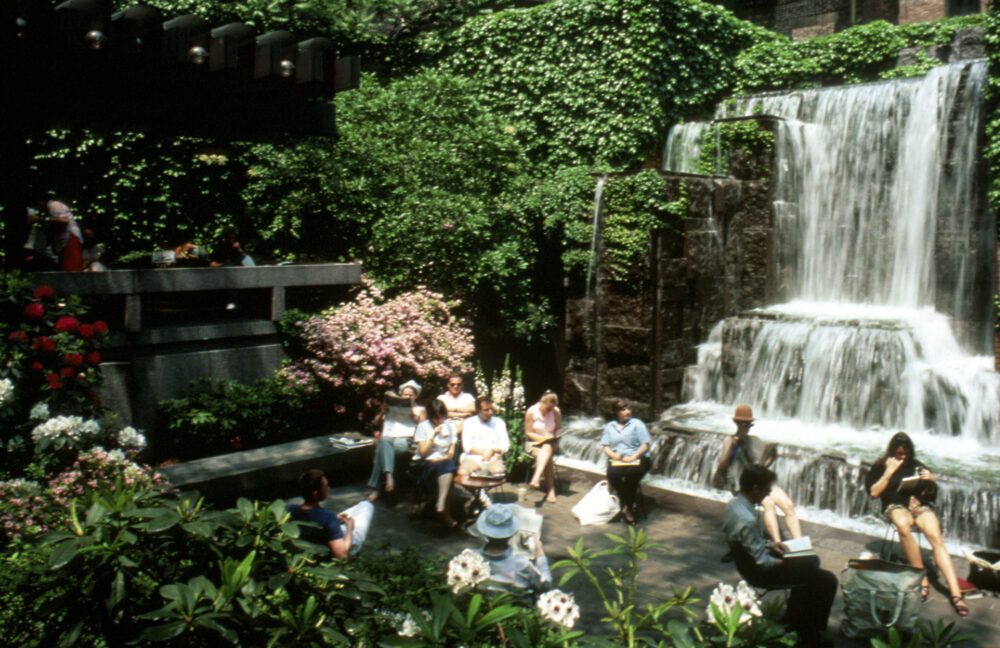
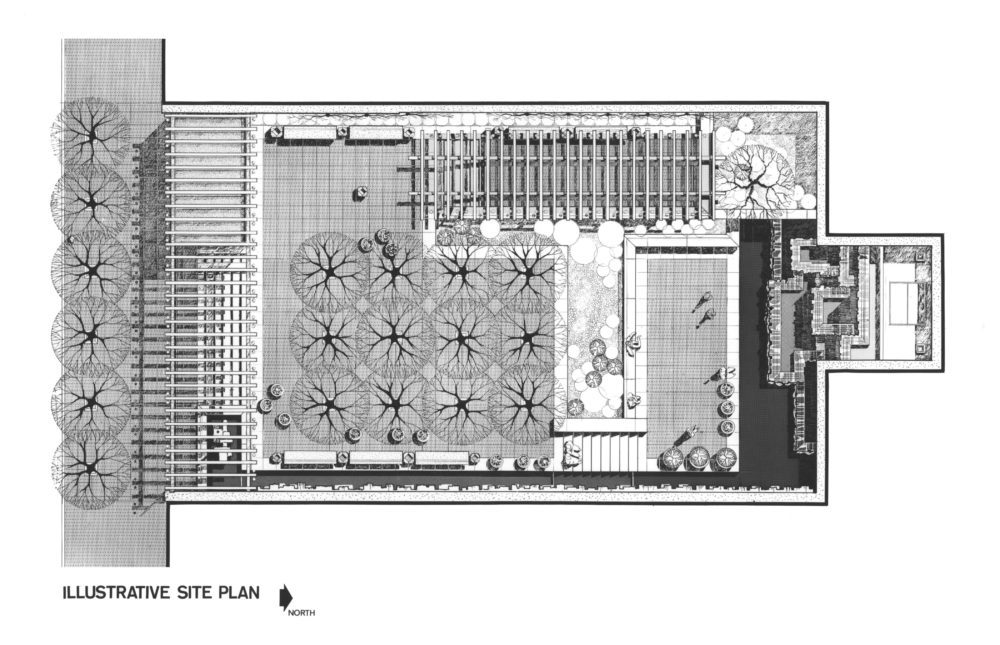
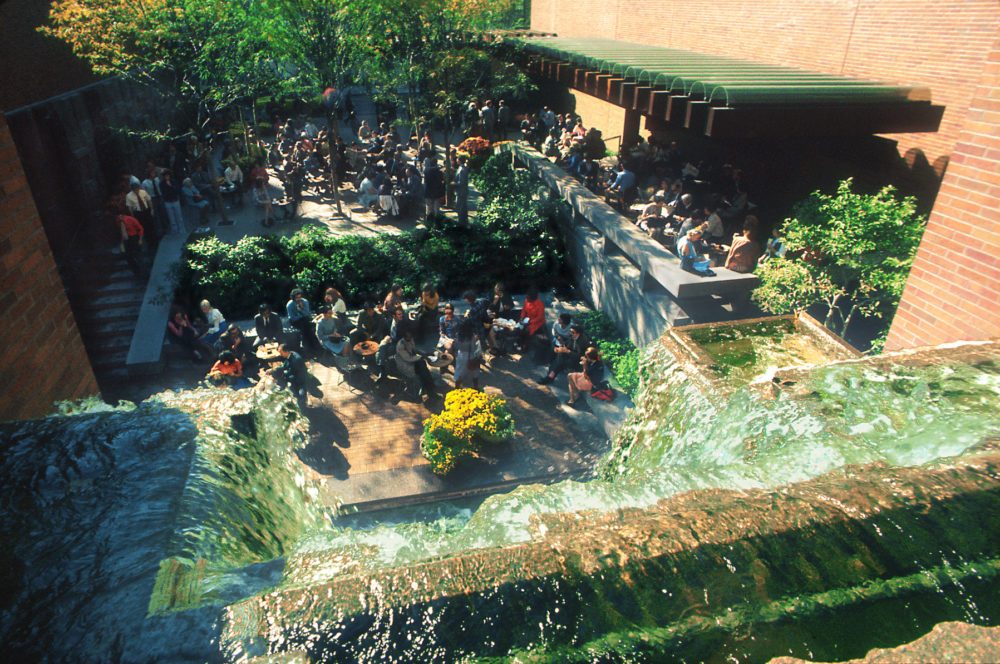
Greenacre Park is a “vest-pocket” park—a style of urban open space popularized in the 1970s in response to the high cost of city center land, high intensity of use, and the need to secure the park after hours. Sasaki provided architecture and landscape architecture for the park, which measures 60 feet by 120 feet and features multi-level sitting areas integrated with plantings and water displays.
Read More:
“Greenacre Park”
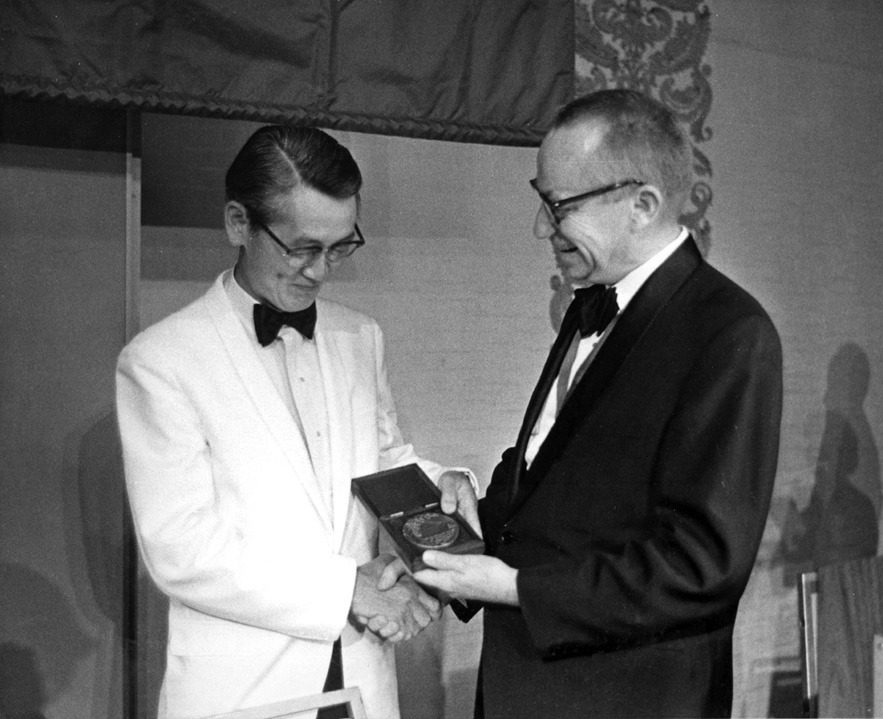
Hideo Sasaki receiving the ASLA Medal, 1971 | courtesy Sasaki Library and Archives
In 1971, Hideo was the first recipient of the American Society of Landscape Architects Medal, ASLA’s highest honor.
courtesy Sasaki Library and Archives
courtesy Sasaki Library and Archives
courtesy Sasaki Library and Archives
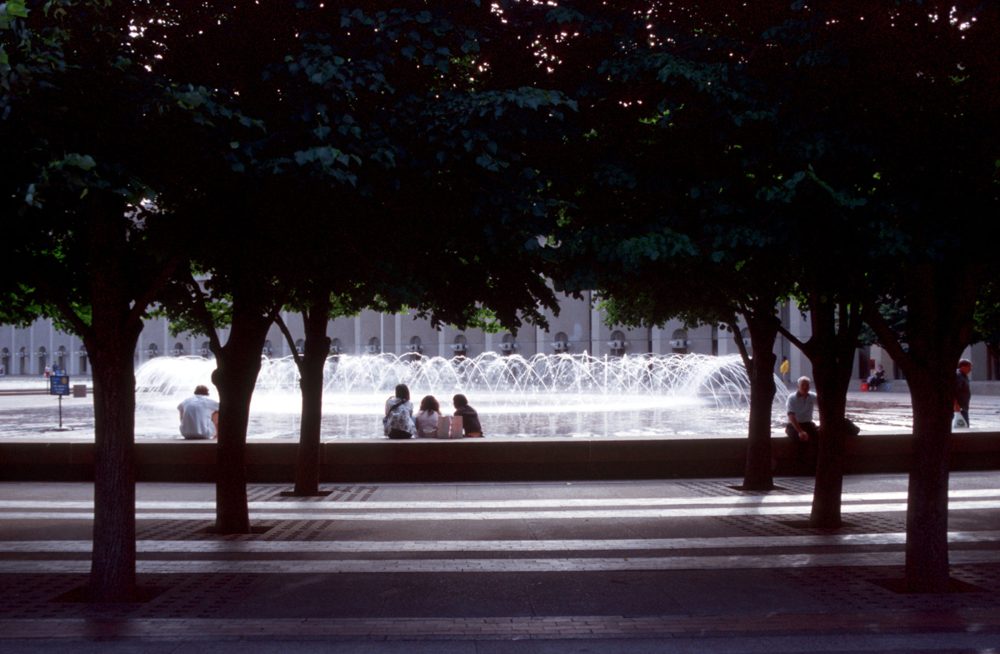
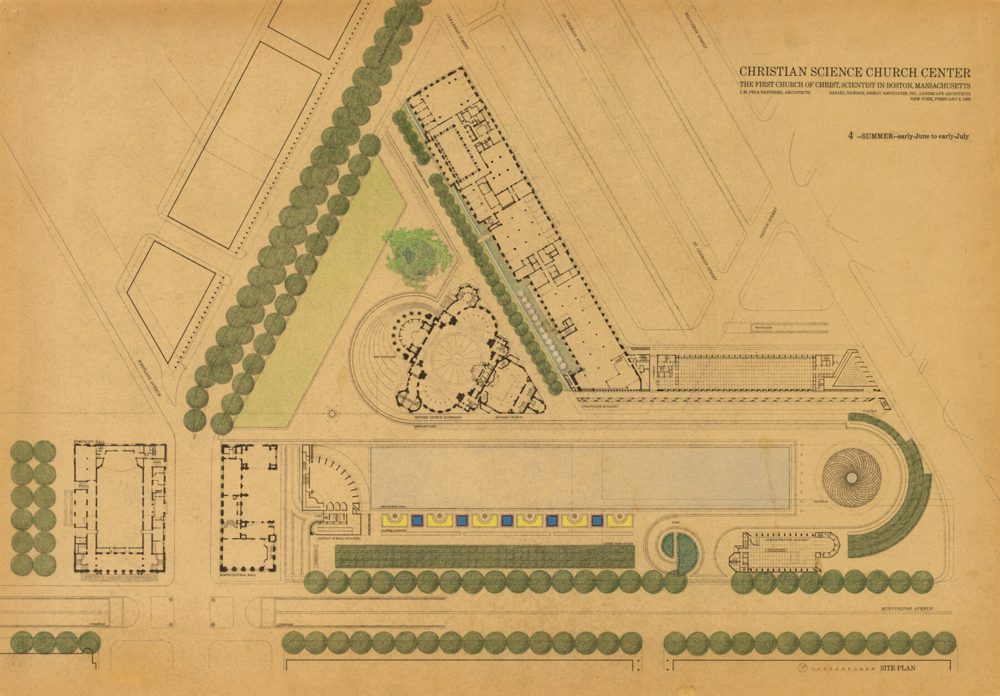
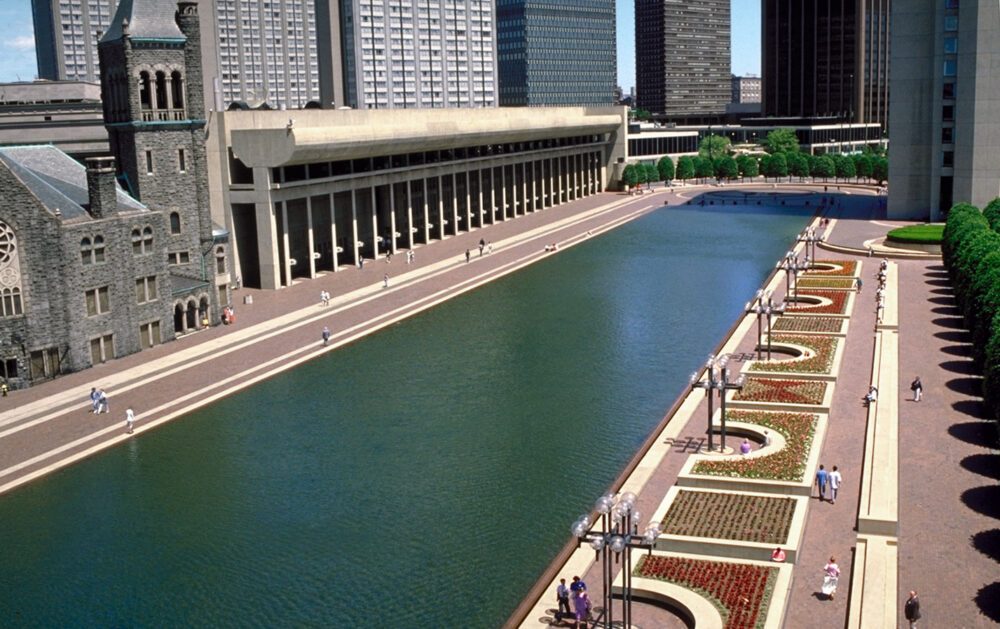
In the late 1960s, Sasaki collaborated with Araldo Cossutta and I.M. Pei & Partners to create a spacious plaza in the heart of downtown Boston. The first modernist landscape designated as a Boston landmark, the Christian Science Plaza melds brutalist and classical design. Located in Boston’s historic Back Bay area and serving as the headquarters for the First Church of Christ, Scientist, the plaza includes the Mother Church and domed Extension, the Sunday School and Conference Center, a 28-story administration building, a publishing house, and the Colonnade Building all centered around a 675-foot reflecting pool. Built by the Church to meet its expanding needs, the Christian Science Plaza consolidated the various administrative and technical functions of the Church’s worldwide activities.
Read More:
“Christian Science Plaza”
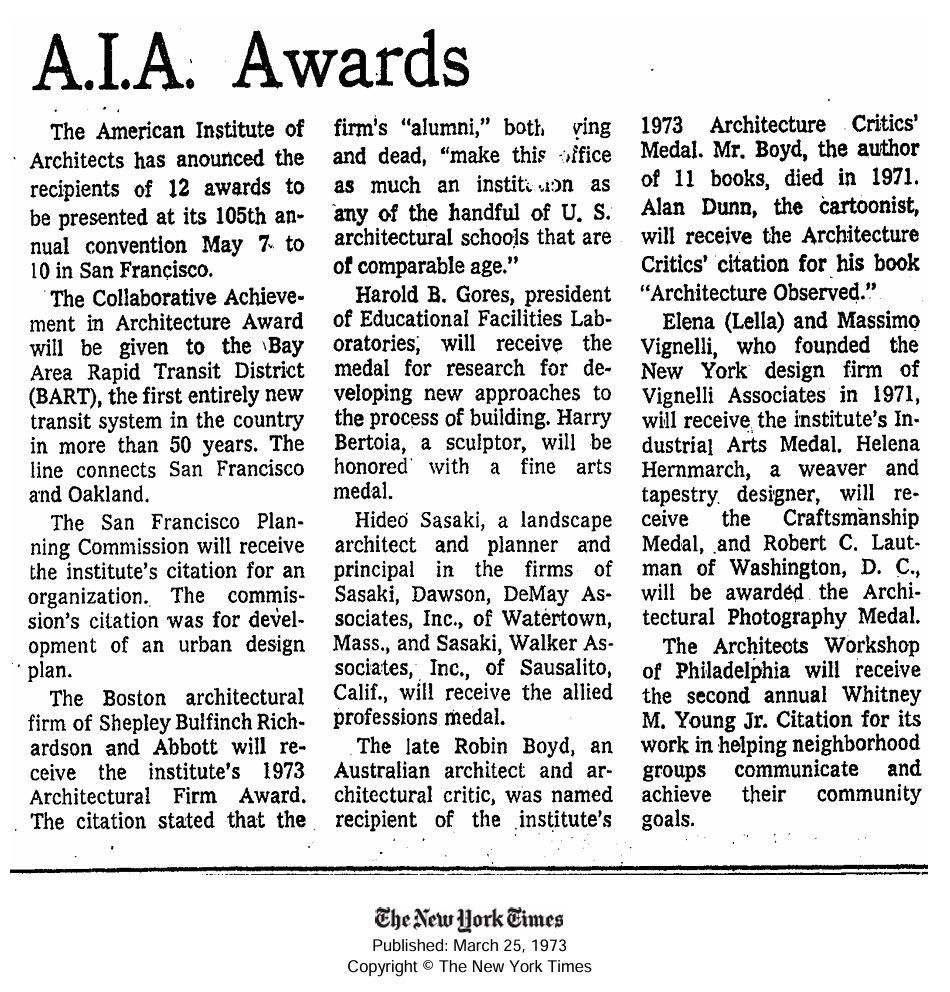
the New York Times, March 25, 1973
In 1973 Hideo received the Allied Professions Medal from the American Institute of Architects.
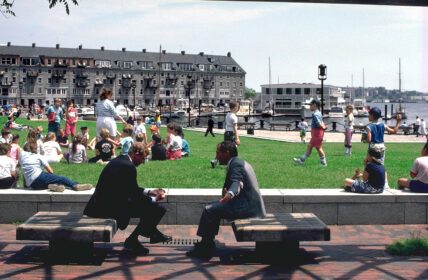
courtesy Sasaki Library and Archives
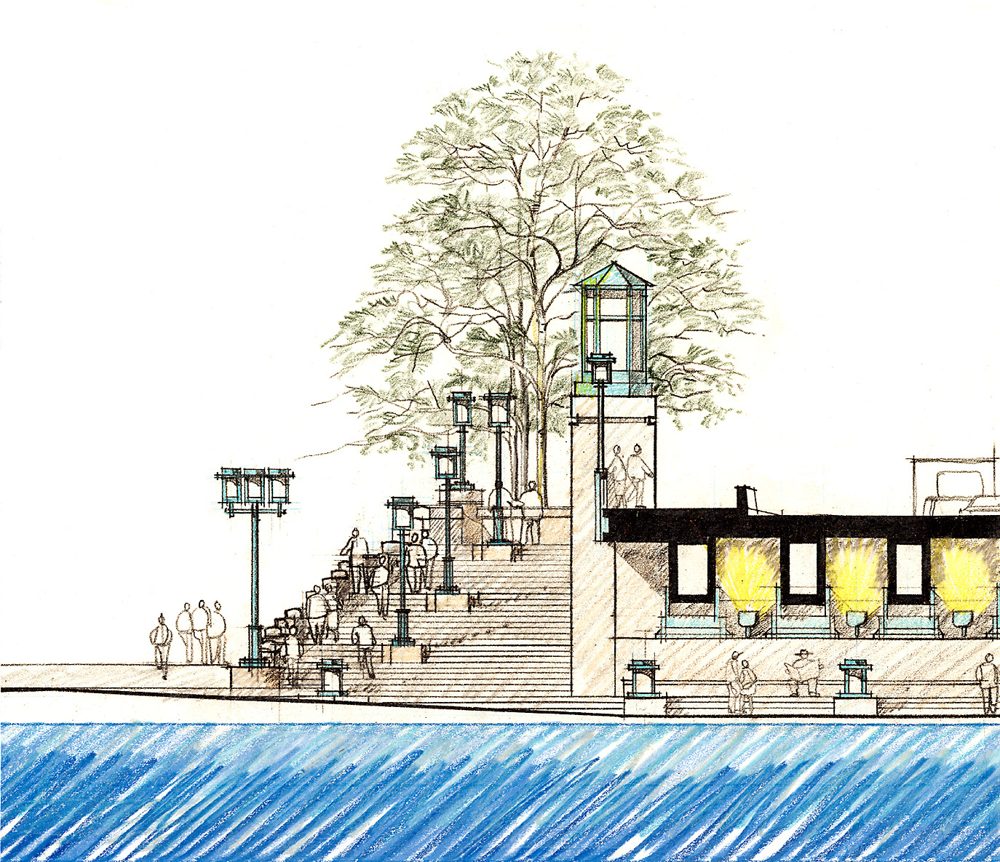
courtesy Sasaki Library and Archives
In the 1960s, Boston Harbor was one of the most polluted in the country. The water was toxic, and industrial zones and parking lots lined the shoreline instead of the vibrant restaurants, hotels, parks, and pedestrian paths that define the area today. The turning point came with the Clean Water Act of 1972, spurring Boston to launch a long-term harbor cleanup. Over the next few decades, billions of dollars were invested in restoring the harbor. Today, Boston boasts one of the cleanest harbors in the nation, with a waterfront that emphasizes public access, open spaces, and climate resilience. Sasaki joined the effort to revitalize the harbor in 1974 with the completion of Boston Waterfront Park. What was once a parking lot soon became a frequented and beloved seaside park, connecting the historic North End back to the sea.
Read More:
“Boston’s Waterfront Legacy: From Pollution to Paradise”
Legacy
PRESENT–1981
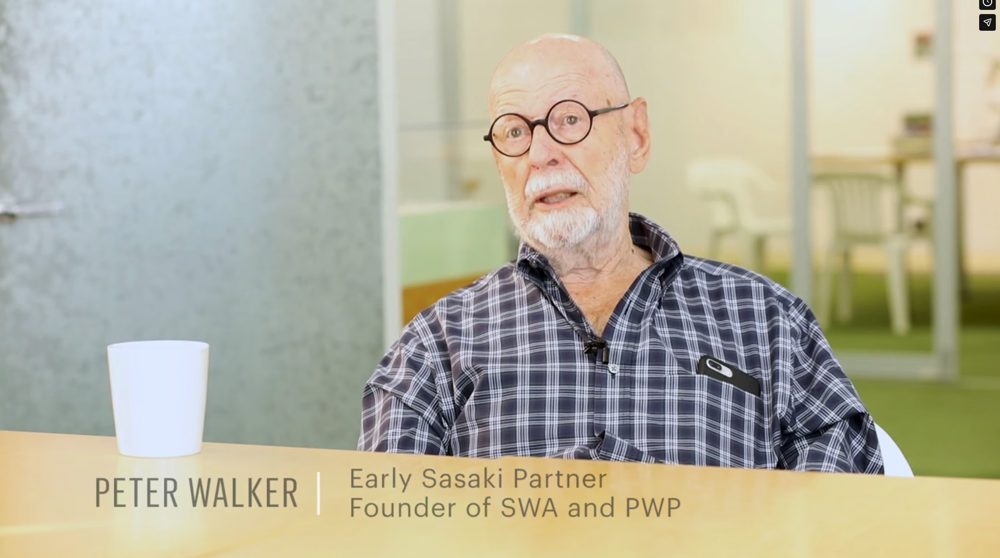
Video of Peter Walker on Hideo, PWP Landscape Architecture
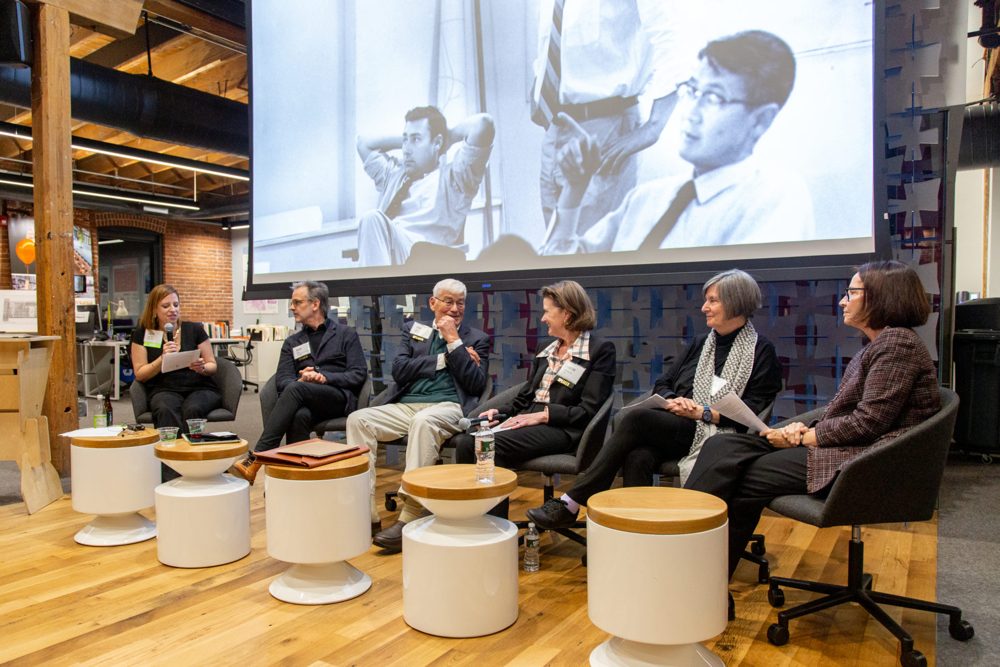
Panel discussion at Hideo 100 Celebration courtesy Sasaki Library and Archives
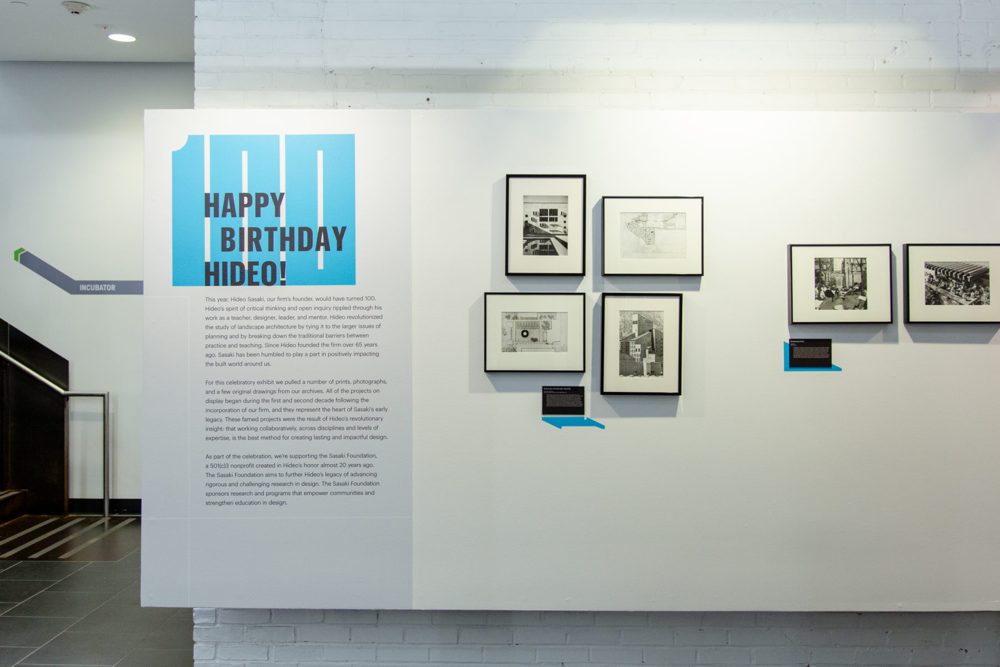
Gallery Celebrating Hideo’s 100th Birthday courtesy Sasaki Library and Archives
After retiring in 1980, Hideo received honorary doctorates from the University of Illinois, University of Colorado, and Ohio State University.
In 2000, Harvard GSD awarded him the Centennial Medal for his impact on landscape architecture at the school. He died in California later that year, and Sasaki founded the Hideo Sasaki Foundation to carry on Hideo’s legacy.
In 2019, Sasaki celebrated Hideo’s 100th birthday with a gallery exhibit, panel discussion, and fundraiser for the foundation.
Hideo is featured in The Cultural Landscape Foundation Pioneers of American Landscape Design.
Sources
In 1944, as part of UC Berkeley’s Japanese American Evacuation and Resettlement Study, Charles Kikuchi interviewed Hideo about his family history and how the bombing of Pearl Harbor affected his education and career. The research became part of Charles’s graduate work at Columbia University. He went on to become an activist and author. #27. Sasaki, Hideo [part 2], Japanese American Evacuation and Resettlement Records, BANC MSS 67/14 c, folder T1.956 (2/2), The Bancroft Library, University of California, Berkeley.
In 1988, five years after Hideo retired, Richard (Dick) Galehouse sat down with his mentor for a wide-ranging conversation. Dick was one of Hideo’s former students who went on to become a partner at Hideo’s firm. The interview survived as a transcript for decades—until 2025 when Dick gifted the original microcassette to the Sasaki Library and Archives, who digitized it.