
Research & Grants › Design Grants › East Boston Mobility Hubs
East Boston Mobility Hubs
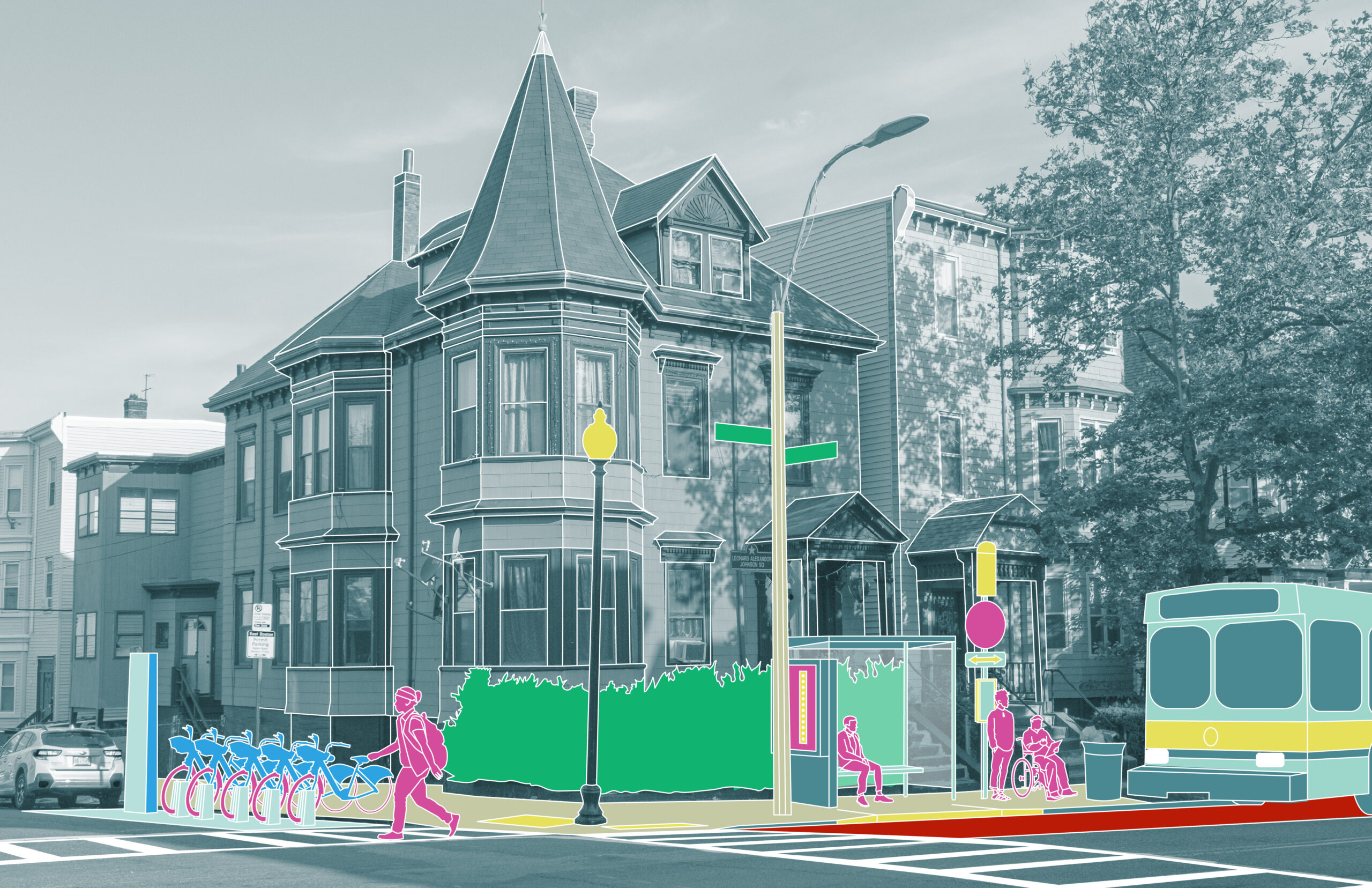
Mobility hub illustration | East Boston Mobility Hubs
Mobility
Matthew Petersen, Alex Yamron, Kirstie Hostetter
2019 Design Grants
The Mobility Hubs Toolkit, intended for local and national distribution and use, explains mobility hubs, their benefits, and the various structural elements that can make up a mobility hub. For each element, the toolkit will include information on siting requirements, expected cost magnitude, who is the likely implementer of that piece of infrastructure, and examples. The toolkit also will walk readers through next steps if they would like to advocate for mobility hubs in their own neighborhoods.
The Mobility Hubs Toolkit, a TransitMatters project, will be written and presented to capture the interest of a non-technical audience, focusing on community organizations and members. The document will be eye-catching with a bright color scheme based on East Boston—the original community that inspired it; will only use open source fonts that can be properly read on any device; and will not include technical jargon. From a broader perspective, the toolkit will engage its audience by creating a vision, using illustrative user stories and mobility hub images to bring the benefits and possibilities of mobility hubs to life.
The team intends to contextualize the toolkit in today’s realities by including a prologue that describes why mobility hubs lie at the center of sustainable mobility, racial justice, and economic recovery. The toolkit will highlight how the 2020 COVID-19 pandemic and protests against police violence have made the need for modal choice and freedom of mobility more urgent than ever, and preview how mobility hubs help accomplish those goals by providing clear, actionable information about the modes available, and gathering those modes of transport all in one place. Additionally, when done well, the process of evaluating a site for a mobility hub guides people through a process of thinking about how different community members move through and reside in a space, which can reveal other inequities or safety concerns to address.
The toolkit will serve as an intellectual anchor for the team’s work promoting sustainable mobility in East Boston, Somerville, and Everett, and hopefully as a resource for advocates in these communities and elsewhere. While completing the research and writing, the team has been working to support city leaders who want to build mobility hubs in their cities and engage other community groups. The toolkit will advance the conversation across the region about what mobility hubs are and why they are necessary, just as TransitMatters advanced the conversation about Regional Rail.
TransitMatters advances people-focused and data-driven solutions to advocate for better public transportation and mobility that provides access and opportunities for everyone across the Commonwealth, addresses climate change and inequality, and strengthens our economy.
Related
 REPORT: 2019-2020 Design Grants ResearchThis week, the Sasaki Foundation published a report with compelling research from the 2019-2020 cohort of the Sasaki Foundation Design Grants, summarizing three innovative and impactful community-based projects. The projects address a range of challenges, from improving emergency homeless shelters, to exploring methods to increase energy resilience, to tackling gentrification in Boston’s Chinatown. The report […]
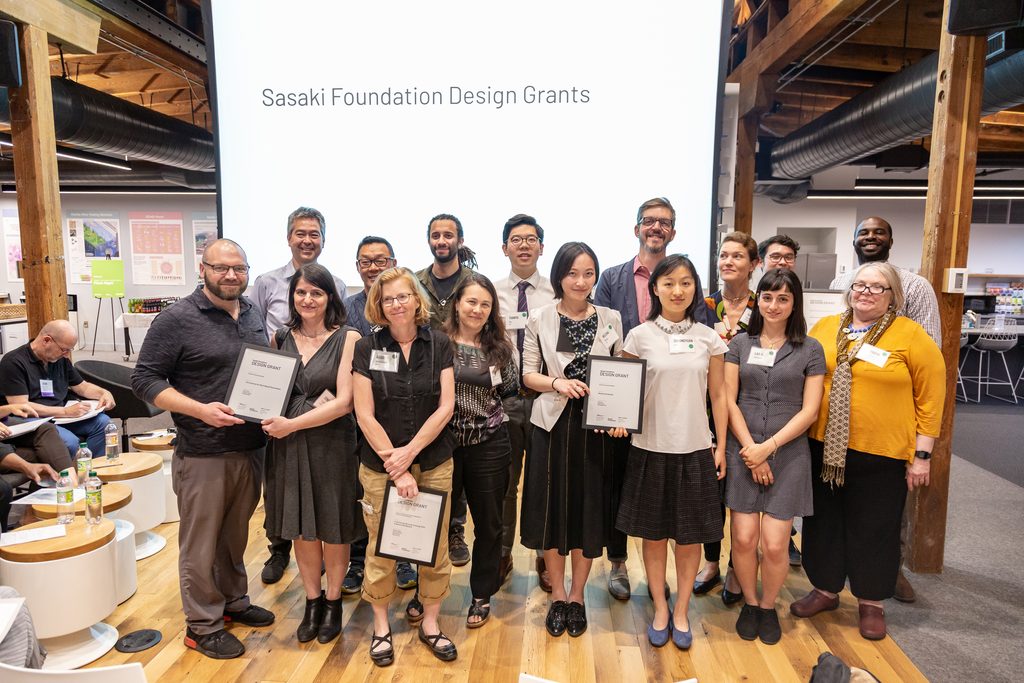 2019 Design Grants winners announcedThe Sasaki Foundation announced today the winning teams for its 2019 Sasaki Foundation Design Grants. The Design Grants are an annual competition to showcase projects that support and drive interdisciplinary innovation and empower our local communities. The Sasaki Foundation also selected two additional finalists to receive Community Grants, to participate alongside the research cohort in […]
 2019 Design Grants Pitch Night