
May 29, 2026
2026 DESI interns complete their community projects
Estefany Benitez

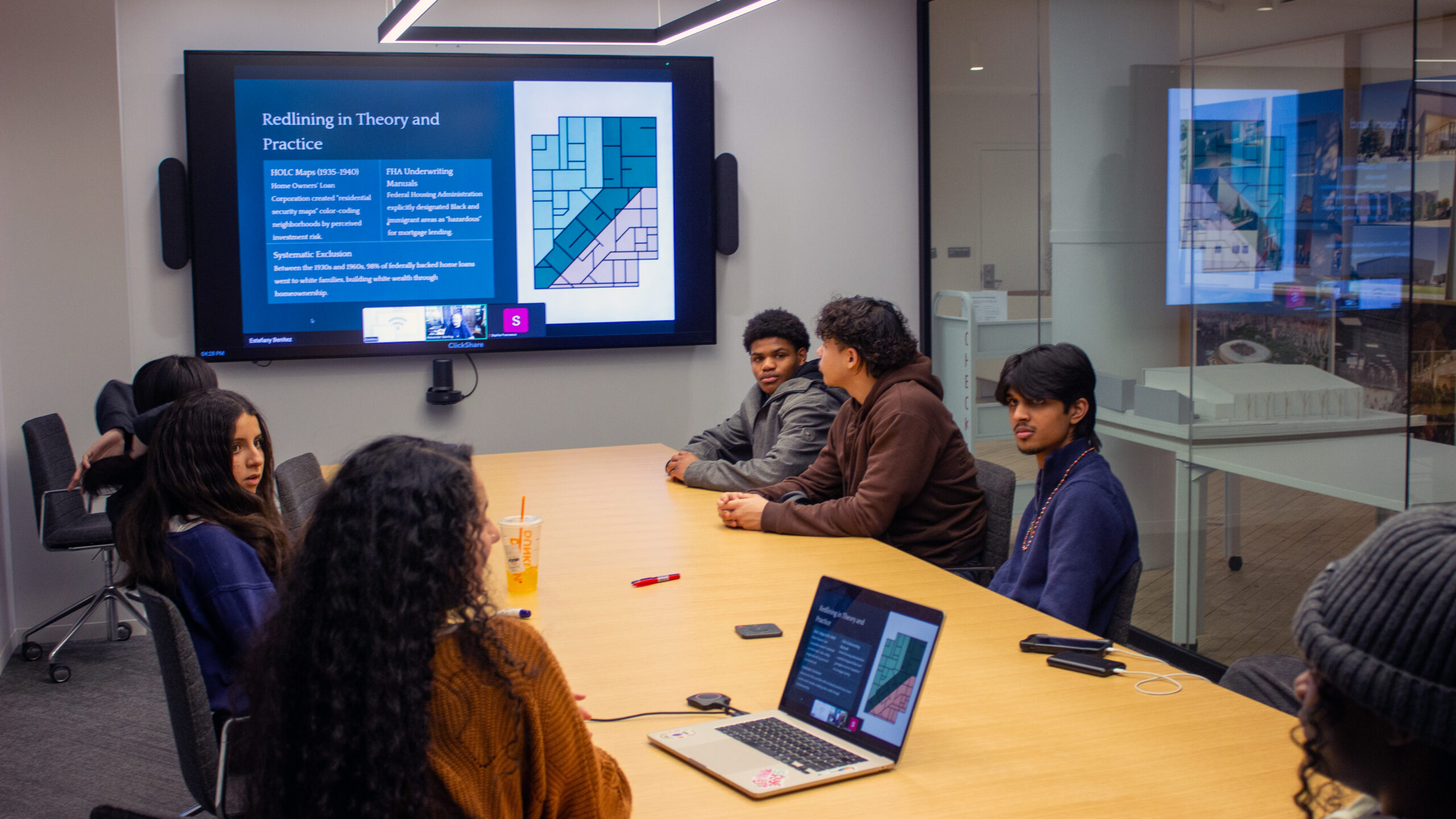
This year, we engaged nine students from six high schools, representing eight unique neighborhoods in Greater Boston. All participants were people of color, emphasizing our commitment to amplify diverse communities and equity in design.
Our 2026 interns participated in 207 hours of high-quality design education programming. They learned the fundamentals of design through professional designers. Experienced educators, activists, and community groups introduced them to various environmental and social impact lessons. All interns reported their DESI experience expanded their knowledge of the design process. Interns also practiced their digital design skills through software workshops on Adobe Illustrator, Adobe Photoshop, and SketchUp. Through thoughtful research, students were able to identify how informed design could benefit their own surroundings.
Jose Mari Antonio from Allston identified neighborhood fragmentation created by the Mass Pike. His design creates overpasses and a visitor center for community members to gather and enjoy views of the skyline and the Charles River.
Garnet Brown Jr. from Dorchester aimed to combat gun violence and prevent youth from joining gangs. He designed a youth center where students could feel a sense of community and creativity.
Xintong Guo from Bay Village designed an age-appropriate modular play structure for adolescents. This space would allow middle and high school students to enjoy physical play and passive use.
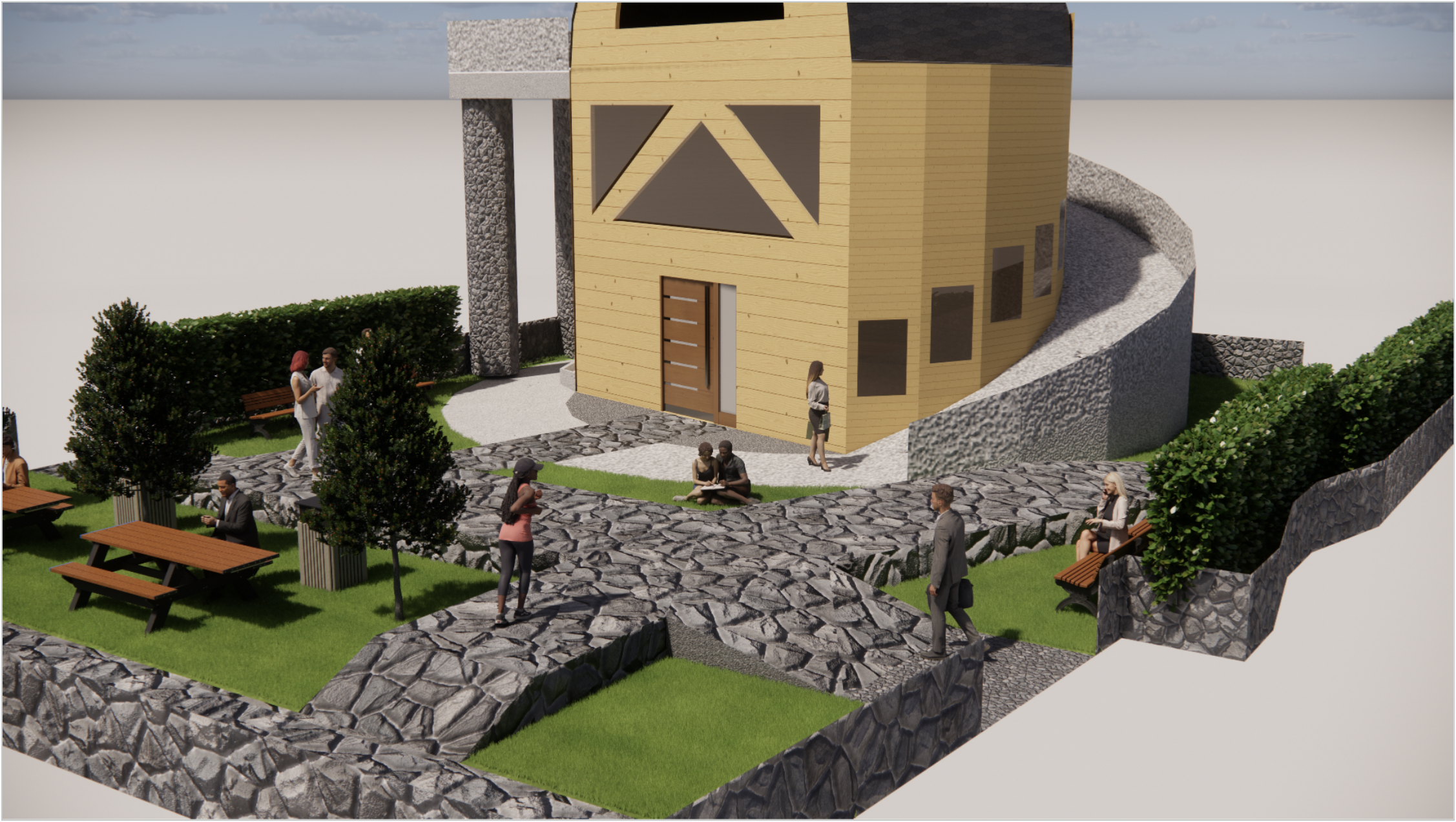
Jose Mari’s Mass Pike overpasses and visitor center
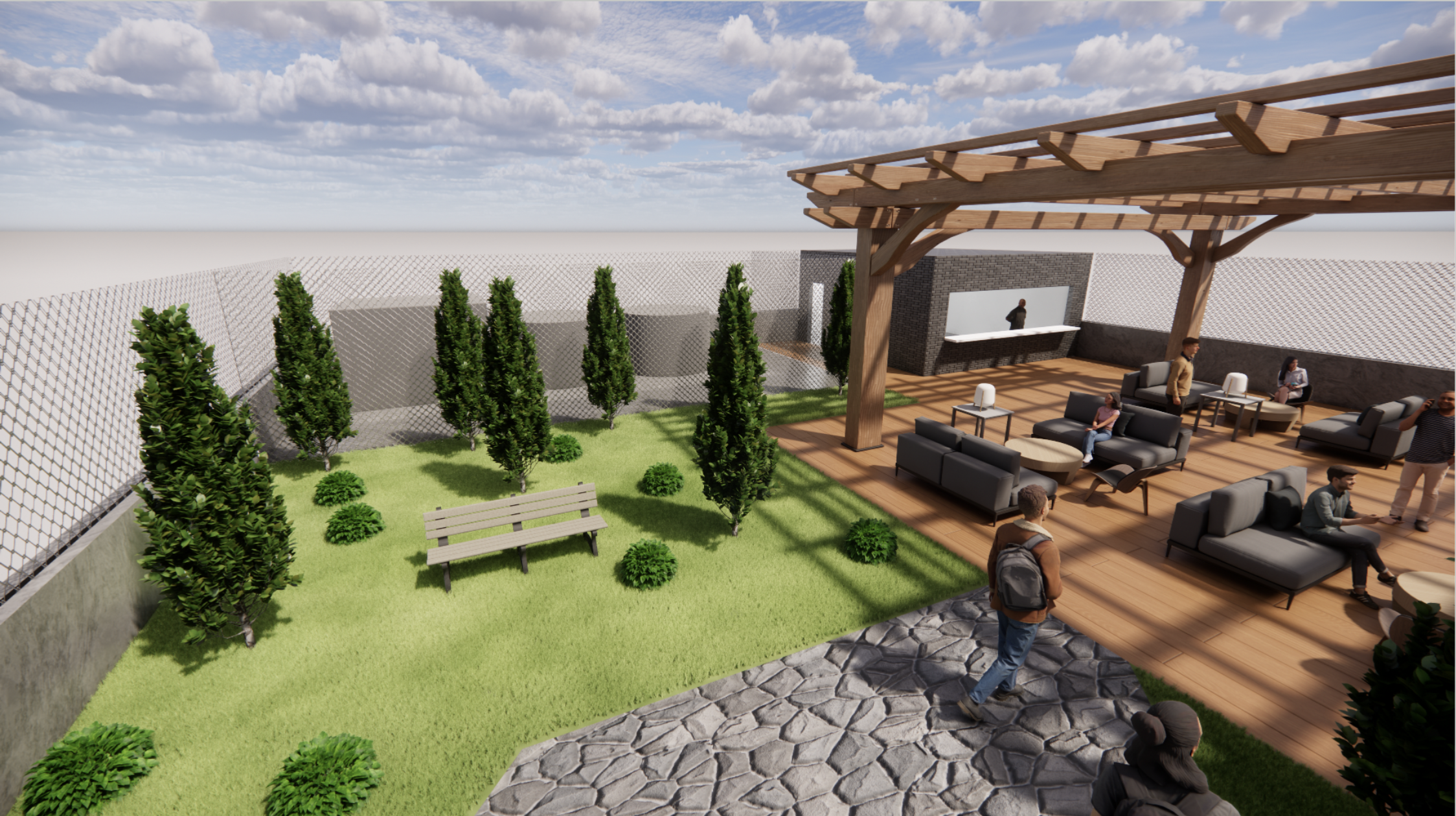
Garnet’s Dorchester youth center
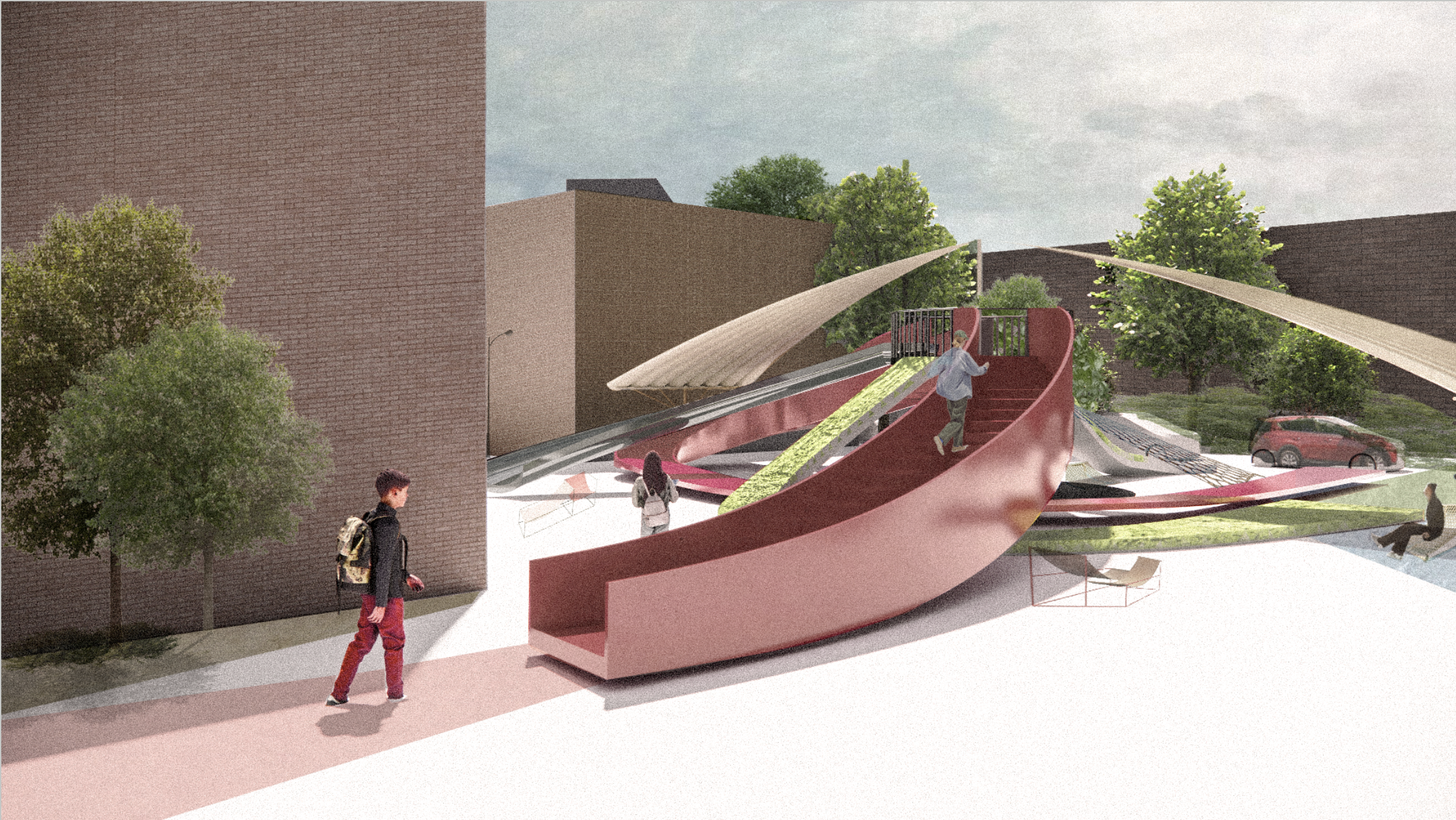
Xintong’s modular play structure
Marwa Naciri from East Boston sought to prevent gentrification. Her design creates an affordable housing unit that preserves and celebrates the culture of the community.
Jonatan Vasquez from Everett researched the overcrowding Everett High School is experiencing. His design adapts a building nearby, turning it into gathering spaces for teachers, and additional classrooms designed for STEM education.
Yadiel Velez from Chinatown designed a new concept for the Chinatown section of the Rose Kennedy Greenway. Her design would increase comfort in the area and enhance community interaction.

Marwa’s East Boston affordable housing unit

Jonatan’s Everett High School expansion
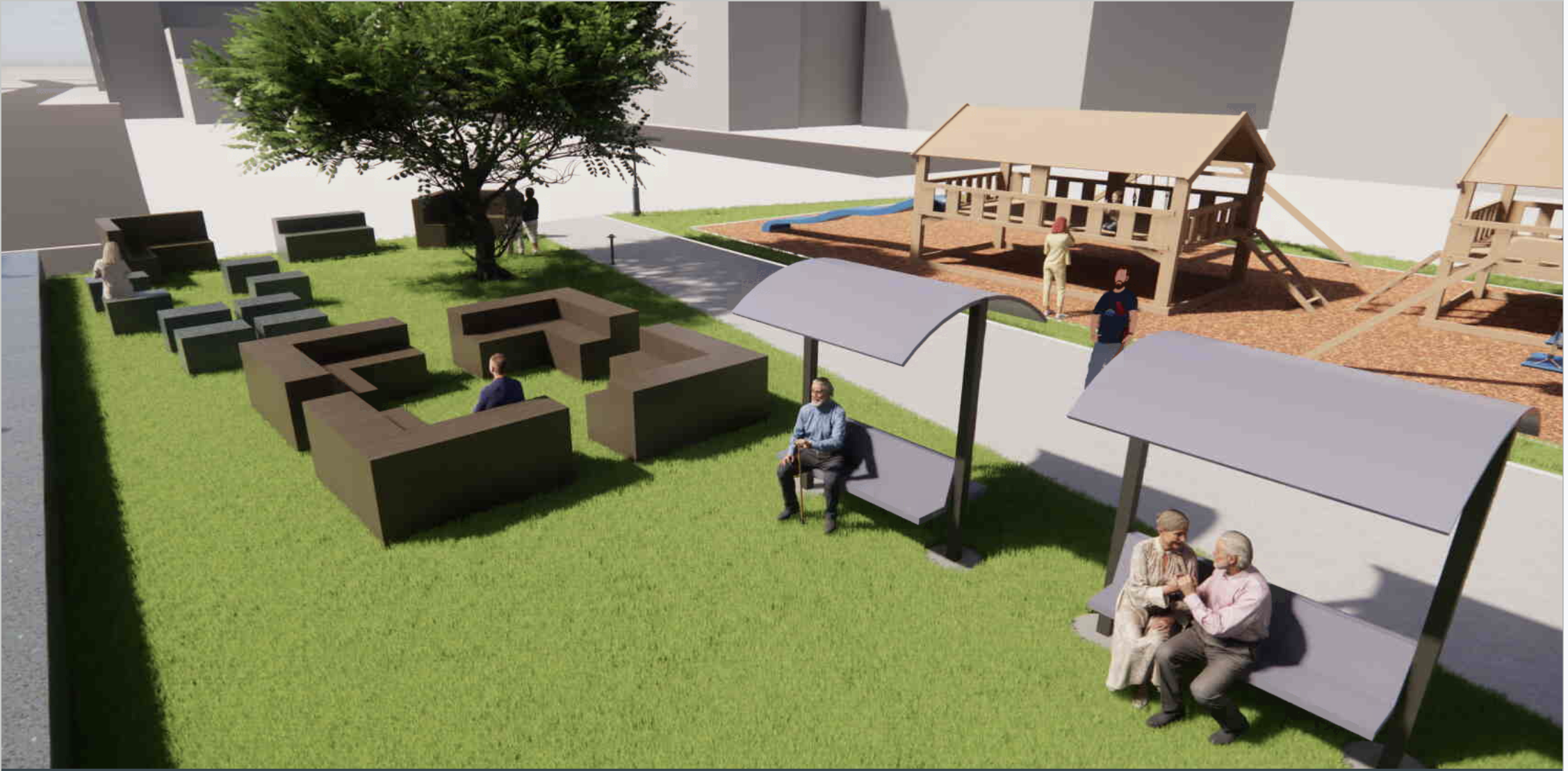
Yadiel’s Rose Kennedy Greenway Chinatown park
Nalla Whitelock from Dorchester recognized local students need a recreational alternative to South Bay Shopping Center. Her design creates a biophilic youth space for recreational and educational activities.
Mahedra Yadav from Somerville identified neighborhood displacement due to soaring housing costs. Her design creates an affordable housing complex that embodies the meaning of community.

Nalla’s biophilic youth space

Mahedra’s affordable housing complex
Get a closer look at the 2026 DESI experience on Instagram with our DESI 2026 highlights, and watch the final presentations on YouTube.
A special thank you to the following contributors for showing outstanding dedication as they supported our interns through their projects and learning.
DESI Mentors: Jared Barnett, Sasaki; Wendy Chavez, Workflow Interiors; Michele Chen, Sasaki; Ishan Ethridge, Sasaki; Joel Kamm, Flexetail; Mytreyi Metta, Sasaki; Marcos Muriel, LiRo-Hill; Risako Nozaki, MIT DUSP; Elise Park, Sasaki; Asmita Patnaik, Sasaki; Ankita Shah, Peabody Office; Kiara Wong, Sasaki
Design Lesson Facilitators: Isaac Andrade, Sasaki; Jared Barnett, Sasaki; Edward Bartholomew, Light Justice; Ignacio Cardona, Wentworth Institute of Technology; Jesse Flores, Sparkshare; Hannah Fuller, Sasaki; Inma Gil Cerezo, Sasaki; Anishta Khan, Sasaki; Nikita K, Sasaki; Mark Lewis, Walker Consultants; Mariana Majima, Sasaki; Enzo Mignano, Sasaki; Jay Nothoff, Sasaki; Taino Palermo, Center for Indigenous Peoples Rights; Luci Silva-Santisteban, Sasaki; Shovan Shah, Sasaki; Alexander Sterling, Turtle Island Community Capital; Allison Toonen-Talamo, Walker Consultants; Anna Zaremba, MIT DUSP
Site Visit Hosts: Ricky Guerra, Jamaica Plain Neighborhood Development Corporation; Naoise McDonnell, Boston Planning Department; Lucia Peña-Banda, Boston Planning Department
The Hideo Sasaki Foundation would also like to thank the DESI staff and teaching assistants: Estefany Benitez, Program Manager; Folajimi Bademosi, Program Coordinator; Alexis Mazzatta, Design Lead; Edwarda Parkinson, teaching assistant, Northeastern University architecture student, and 2023 and 2024 SEED alum; and Lucinda Sun, MIT architecture and planning student.
Finally, thank you to all of the DESI funders, partners, and supporters who make this program possible.
Funders: Commonwealth Corporation via Metro North Workforce Board, City of Boston Office of Youth Employment and Opportunity, Sasaki
Supporting Organizations: City of Boston Planning Department, Jamaica Plain Neighborhood Development Corporation